


BLOG
CONTENTS
- EU REACH Tightens NPEOs Limit for Paper ImportsAug 09, 2026
- EU Enforces NPEOs Ban on Coated Paper ImportsAug 08, 2026
- EU REACH Restriction on NPEOs in Paper Coatings Takes EffectAug 07, 2026
- EU REACH Tightens Paper Chemical Rules From Aug. 15Aug 06, 2026
- ECHA Adds 3 SVHCs, Exporters Recheck DeclarationsAug 05, 2026
EU Restricts Paper Brighteners Under REACH
On October 1, 2026, a new EU compliance requirement takes effect for paper products exported from China to the EU. Following the European Commission’s publication of Regulation (EU) 2026/1192 on July 11, 2026, three fluorescent whitening agents, FWA-1, FWA-5 and FWA-7, are now restricted under REACH Annex XVII for paper packaging intended for prolonged skin contact, including food-contact paper, tissue paper and medical packaging paper. For exporters, manufacturers, importers and testing-related service providers, the immediate issue is no longer only product composition, but also whether shipment documents can demonstrate compliance in time for customs clearance.
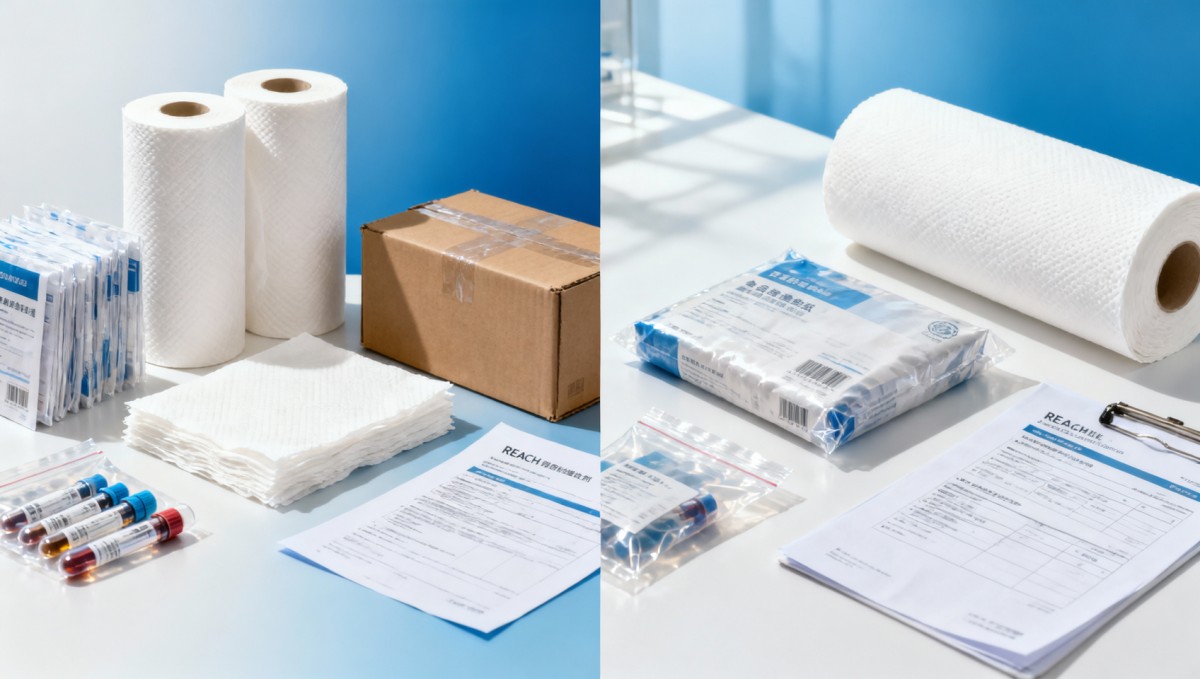
What the New Rule Formally Changes
According to the provided information, the European Commission added FWA-1, FWA-5 and FWA-7 to REACH Annex XVII through Regulation (EU) 2026/1192, published on July 11, 2026. The restriction applies to paper packaging that is in prolonged contact with skin, with examples including food-contact paper, tissue paper and medical packaging paper.
The rule becomes mandatory on October 1, 2026. From that date, Chinese exporters must provide EU importers with a declaration of conformity and test reports issued by a laboratory accredited to ISO/IEC 17025. If these documents are not provided, customs clearance will be denied.
Where the Pressure Will Be Felt First
Export transactions face a documentation threshold
From an industry perspective, direct exporters are likely to feel the impact first at the shipment and customs stage. The issue is not limited to whether products meet the substance restriction, but whether the required declaration of conformity and laboratory test reports are available in a form acceptable to the EU importer before goods are presented for clearance.
Paper and packaging manufacturers must connect formulation and proof
Manufacturing companies involved in food-contact paper, tissue paper and medical packaging paper may be affected because the restriction targets products used in prolonged skin contact scenarios. Analysis shows that the operational impact is likely to appear in raw material selection, production verification and document readiness, especially where existing product specifications or supplier inputs may involve the listed fluorescent whitening agents.
EU importers and buyers will likely tighten pre-shipment checks
EU-side importers and purchasing teams may be affected because they are the receiving party for the declaration of conformity and test reports. What deserves closer attention is the likelihood that buyer-side review will move earlier in the transaction process, with more scrutiny on whether supporting documents come from ISO/IEC 17025 accredited laboratories and are aligned with the restricted substances named in the regulation.
Testing and supply chain support functions become more time-sensitive
Supply chain service providers, compliance coordinators and testing-related service teams may see the impact through scheduling and delivery timing. Observably, once customs rejection risk is tied directly to the absence of compliant documentation, the practical bottleneck can shift from manufacturing completion to test report issuance and document handover.
What Companies Should Track Now
Confirm whether targeted paper categories are involved
Companies should first identify whether their exported products fall into the paper categories described in the provided information, particularly products intended for prolonged skin contact such as food-contact paper, tissue paper and medical packaging paper. This is the basic step for determining exposure to the new restriction.
Check whether supplier and laboratory arrangements match the rule
The new requirement is tied not only to substance control but also to proof of compliance. Businesses should pay close attention to whether their documentation chain can support an EU importer’s review, including whether test reports are issued by an ISO/IEC 17025 accredited laboratory and whether the declaration of conformity can be delivered without delaying shipment.
Separate legal text from shipment execution
Analysis shows that one practical risk is treating the regulation as only a legal update rather than an execution requirement. In this case, the provided information makes clear that non-compliant documentation can lead to customs rejection. That means commercial teams, production teams and compliance staff need a shared understanding of what must be ready before export, not after arrival.
Maintain closer communication with EU customers
For exporters, customer communication deserves closer attention because the importer is the party receiving the required documents. It is more appropriate to understand this as a coordination issue as much as a technical one: document format, submission timing and product scope should be aligned early to reduce the risk of shipment interruption.
Why This Looks Like More Than a Short-Term Filing Update
Observably, this development should not be read as a routine paperwork adjustment alone. The confirmed facts show a combination of substance restriction and document enforcement, with a clear implementation date and a direct customs consequence for missing proof. Analysis shows that this gives the measure immediate operational weight for companies exporting affected paper products from China to the EU.
At the same time, it is more appropriate to understand this as a concrete compliance change already in force from October 1, 2026, rather than a distant policy signal still awaiting business relevance. Continued attention is still necessary, however, because day-to-day execution will depend on how companies map product scope, testing arrangements and importer communication to the new requirement.
How the Market Should Read This Update
The industry significance of this update lies in its direct link between restricted fluorescent whitening agents in certain paper products and the documentation needed to keep exports moving. For affected businesses, the issue is not abstract regulatory awareness but whether product review, testing and shipping preparation are aligned with the October 1, 2026 enforcement point.
On balance, this is best understood as an implemented compliance requirement with immediate trade relevance, rather than a speculative long-term trend. The broader market impact still needs continued observation, but the near-term implication for affected exporters and their EU partners is already clear: compliance evidence is now part of market access.
Basis and Verification Notes
This article is based on the user-provided news title, event date and event summary. The analysis above draws only from the stated facts that Regulation (EU) 2026/1192 was published by the European Commission on July 11, 2026, that FWA-1, FWA-5 and FWA-7 were added to REACH Annex XVII for relevant paper applications, that the rule became mandatory on October 1, 2026, and that Chinese exporters must provide a declaration of conformity and test reports from an ISO/IEC 17025 accredited laboratory to EU importers or face customs rejection.
For this type of development, source categories typically relevant to ongoing verification include official regulatory notices, company compliance disclosures, industry association updates, authoritative media coverage and standards-related documents. A specific official source link was not provided in the input, so continued verification remains necessary. Follow-up attention should focus on any further official wording, scope clarification and implementation details affecting document preparation and customs practice.