


CONTENTS
- Brazil Mulls Doubling Tariffs on Low-Cost Paper ImportsAug 17, 2026
- China’s Paper Industry to Join Carbon Market in Phases, Raising Export Compliance PressureAug 16, 2026
- China’s Paper Sector to Enter the National Carbon Market in 2026, Raising Export Compliance PressureAug 15, 2026
- China Paper Exports Jump 92.5% in Jan-MayAug 14, 2026
- The EU's PPWR enters into force today, raising compliance thresholds for paper-based packaging exported to the EU.Aug 13, 2026
China’s Paper Sector to Enter the National Carbon Market in 2026, Raising Export Compliance Pressure
According to a recent official notice from the China Emissions Exchange Registration and Settlement Co., Ltd. (Wuhan), the paper industry has entered the implementation phase for expansion into the national carbon emissions trading market. The market will begin mandatory compliance in batches under the principle of "one mature segment, one inclusion segment." Based on the information provided, this adjustment is set to become a practical issue for export-oriented paper products, especially where carbon footprint accounting, green labeling and overseas procurement screening are involved.
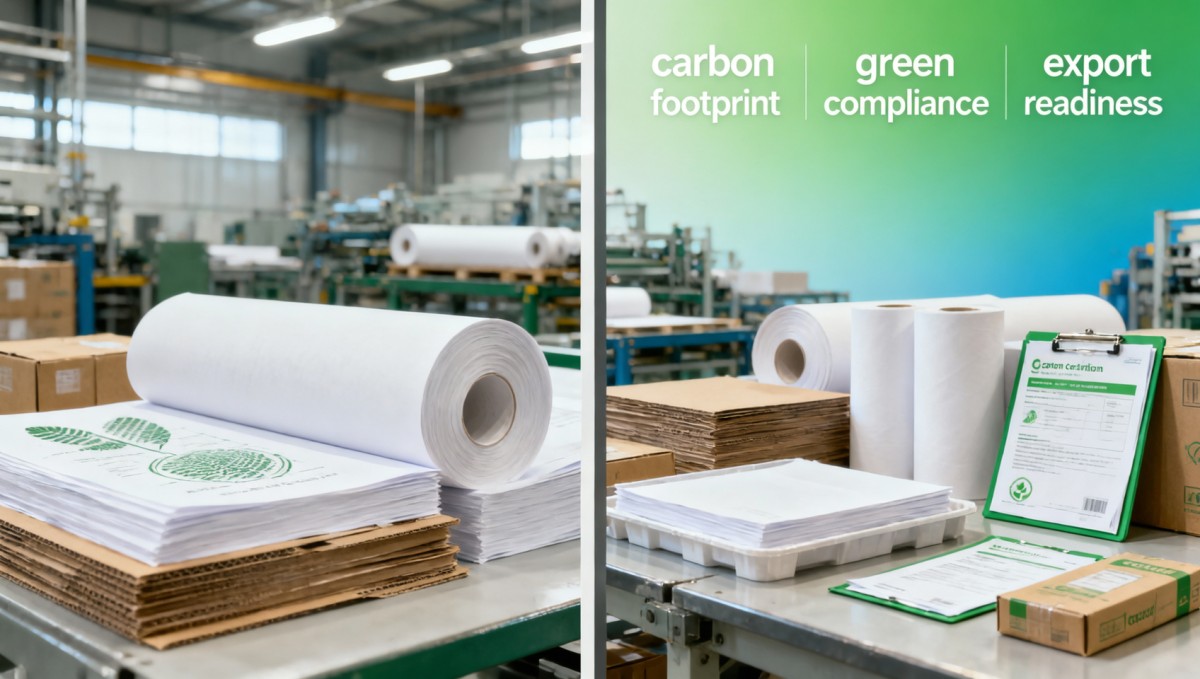
For exporters, the most immediate impact is unlikely to be limited to domestic emissions management. Carbon data management may increasingly affect how paper products are positioned in international trade, including the preparation of product carbon footprint disclosures, the pursuit of environmental product declarations such as EPD, and the use of PCF-related documentation in buyer negotiations. In markets where sustainability documentation is already part of procurement review, the quality and consistency of carbon information can influence whether a supplier is seen as ready for long-term orders.
The announcement also carries a broader signal for cross-border compliance. If paper products move further into carbon-market regulation, overseas buyers may pay closer attention to whether Chinese suppliers can support carbon accounting aligned with their own ESG procurement rules. It may also heighten attention to potential exposure under the EU CBAM framework, even where direct coverage is still uncertain for specific paper categories. In practice, this means carbon performance is no longer only a domestic compliance topic; it is becoming part of export competitiveness.
From an industry perspective, the phrase "one mature segment, one inclusion segment" suggests that the rollout is expected to be phased rather than uniform. That usually leaves room for differentiated readiness across companies, production lines and product types. For enterprises, the real task may be to identify where emissions data is already sufficiently robust for compliance, and where internal accounting, verification and documentation still need to be built out.
For importers and international buyers, the development provides a timely reference point when assessing Chinese suppliers’ low-carbon credentials. Procurement teams that rely on ESG screening or sustainability scoring may need to ask for clearer emissions records, traceable product-level carbon information, and evidence that green certifications are being managed in a consistent way.
What happens next will depend on how the expansion is implemented in later batches and how quickly companies adapt their carbon-accounting systems. The most important follow-up information will likely come from official announcements, industry association updates and related regulatory notices, especially any detail that clarifies the scope, timeline and compliance requirements for paper products in export channels.