


BLOG
CONTENTS
- EU CBAM Price Rises to €75.36/t; Green Methanol Plastics Gain Cost EdgeMay 07 2026
- 2026 Polyacrylamide Price Trend: Strategic Insights for Global SourcingFeb 26 2026
- Top 10 Global Defoamer Manufacturers & 2026 Market InsightsJan 16 2026
- What is the price of adipic acid?Jan 16 2026
- 【Weekly Report】 China Corrugated Paper Market Analysis and Price Index, January 9Jan 09 2026
EU CBAM Price Rises to €75.36/t; Green Methanol Plastics Gain Cost Edge
On 30 April 2026, the European Union published its first quarterly carbon price under the Carbon Border Adjustment Mechanism (CBAM) at €75.36 per tonne of CO₂e — a development with direct implications for exporters of carbon-intensive chemicals and plastics to the EU market.
Event Overview
On 30 April 2026, the European Commission officially announced the inaugural quarterly CBAM certificate price: €75.36 per tonne of carbon dioxide equivalent (CO₂e). This applies to imports covered under the CBAM transitional reporting phase, including certain inorganic chemicals, fertilizers, iron and steel, aluminum, cement, electricity, and — critically — downstream polymer products where embedded emissions are reportable. Concurrently, publicly reported data indicate that green methanol-based fossil-free plastics — such as polypropylene and polyethylene produced in China — achieve over 6 tonnes of CO₂e reduction per tonne compared to conventional routes. European plastics manufacturer Vioneo confirmed plans to build a 300,000-tonne-per-year green methanol plastics facility in China.
Which Subsectors Are Affected
Direct Exporters of Carbon-Intensive Polymers
Exporters of conventional polyethylene, polypropylene, and other CBAM-reportable polymers face higher compliance-related costs. Under CBAM’s current transitional framework, importers must report embedded emissions; once the full regime enters force, certificates will be purchased based on those emissions. A €75.36/t CO₂e price translates into material cost uplift for high-emission production routes — especially where grid electricity or coal-based steam is used in cracking or polymerization.
Raw Material Sourcing & Procurement Teams
Procurement functions managing feedstock supply chains — particularly for ethylene, propylene, or polymer-grade resins destined for EU-bound finished goods — now confront new upstream carbon accounting requirements. The CBAM price signals growing financial weight behind emission verification: suppliers unable to provide verified, low-carbon emission data may see reduced competitiveness or exclusion from EU-facing tenders.
Plastics Converters & Compounders
Manufacturers blending, compounding, or molding imported resins for EU markets must assess whether their processing steps trigger additional CBAM reporting obligations — especially if they perform energy-intensive operations (e.g., extrusion, injection molding) using non-renewable power. While CBAM currently targets primary production, downstream processors increasingly face contractual pressure to disclose Scope 1 & 2 emissions linked to resin inputs.
Supply Chain & Logistics Service Providers
Third-party logistics providers, customs brokers, and certification support firms handling EU-bound chemical shipments must now integrate CBAM-specific documentation workflows — including emission declarations, verification readiness checks, and potential certificate procurement coordination — into standard import clearance procedures for affected goods.
What Relevant Companies or Practitioners Should Monitor and Do Now
Track official CBAM implementation milestones and scope updates
The €75.36/t figure reflects the first quarterly price only. The European Commission will revise this value quarterly based on the EU ETS allowance price. Companies should monitor upcoming Commission notices — especially regarding expansion of covered sectors beyond the current list, inclusion of downstream products like plastic articles, and timelines for mandatory certificate purchases post-2026.
Identify and benchmark carbon intensity of key resin SKUs
For any polymer SKU exported to or incorporated into goods shipped to the EU, companies should obtain verified cradle-to-gate emission data (in kg CO₂e/kg resin). This includes distinguishing between grid-mix-based vs. green-electricity-powered production, and accounting for green methanol vs. grey methanol feedstock. Discrepancies of >2–3 tonnes CO₂e/tonne resin may already translate into >€150/tonne CBAM exposure at current pricing.
Distinguish between policy signaling and enforceable obligations
As of April 2026, CBAM remains in its transitional reporting phase: no certificate purchases are yet required. However, the published price serves as a clear forward-looking signal for cost planning. Firms should avoid conflating voluntary carbon claims (e.g., “low-carbon resin”) with CBAM-compliant reporting — which requires third-party verification against EU-approved methodologies.
Assess near-term sourcing alternatives with documented low-carbon credentials
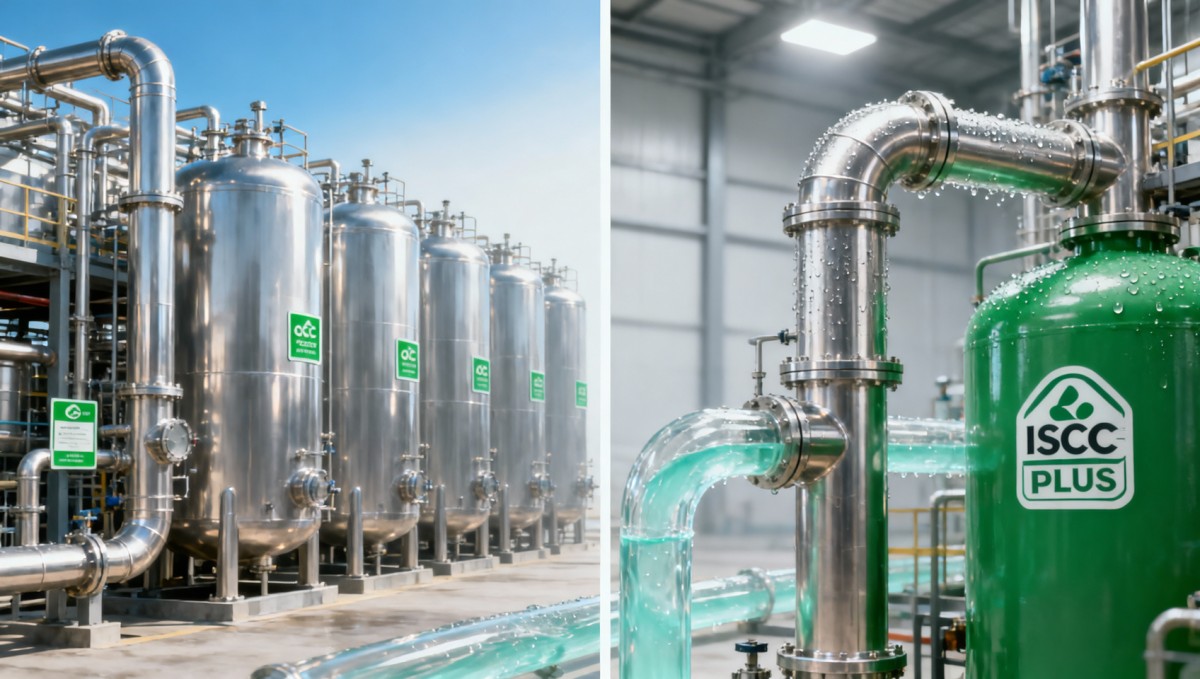
Green methanol-derived plastics — with verified >6 tCO₂e/tonne reduction — represent one emerging alternative. Companies should evaluate supplier eligibility for CBAM-relevant emission offsets or feedstock traceability (e.g., ISCC PLUS certification), not just marketing labels. Early engagement with producers piloting such routes — like Vioneo’s planned facility — may support longer-term supply assurance and compliance readiness.
Editorial Perspective / Industry Observation
Analysis shows this €75.36/t CBAM price is best understood not as an immediate cost imposition, but as a calibrated calibration point — anchoring future liability expectations across the EU’s industrial import regime. Observably, it marks the first time CBAM has moved beyond theoretical modeling into publicly disclosed, time-bound pricing. From an industry perspective, the concurrent emergence of green methanol plastics with quantified, large-scale emission reductions suggests a structural shift: carbon cost advantage is becoming a measurable input parameter in global polymer sourcing decisions — not merely an ESG footnote. Current more relevant interpretation is that this is a strong policy signal accelerating due diligence on embedded emissions, rather than a finalized operational burden.
Conclusion
This CBAM price update does not yet impose direct fees, but it materially advances the timeline for carbon-cost integration into cross-border polymer trade. It signals growing financial relevance of upstream decarbonization — especially feedstock choice and energy sourcing — for exporters and buyers alike. For industry stakeholders, the event is better understood as a milestone in regulatory maturation: one that rewards verifiable, scalable low-carbon production pathways while raising the baseline for transparency and accountability in global chemical supply chains.
Source Attribution
Main source: European Commission official CBAM quarterly price announcement, 30 April 2026.
Additional context: Publicly disclosed project plans by Vioneo; technical specifications for green methanol-based fossil-free polyolefins as reported in EU-aligned sustainability disclosures (Q1 2026).
Note: CBAM’s full enforcement timeline, sectoral expansion schedule, and final methodology for downstream product coverage remain subject to ongoing EU legislative review and are to be monitored closely.