products
‹
›
‹
›
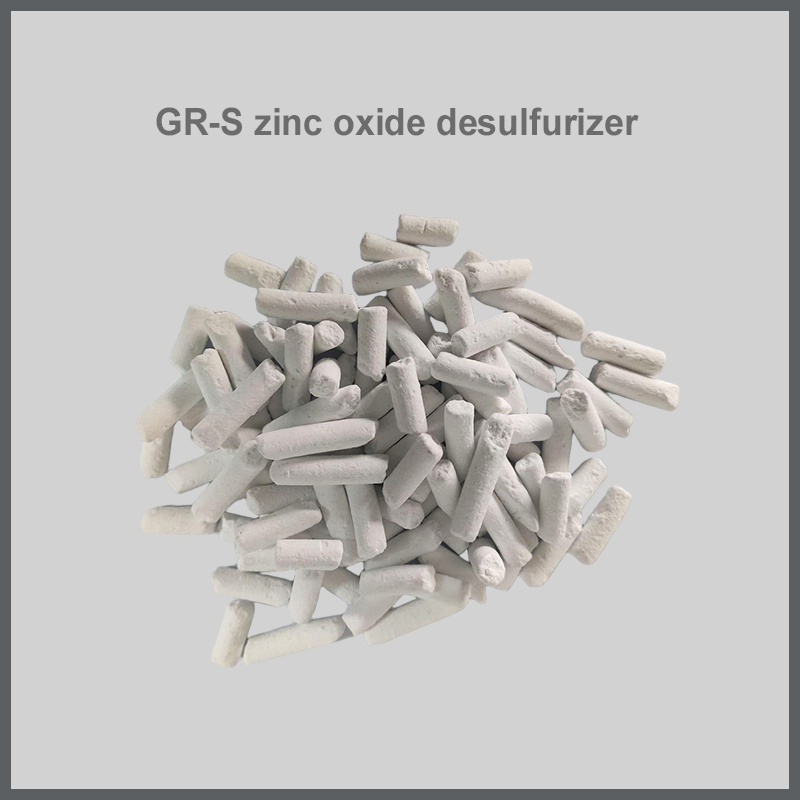
GR-S zinc oxide desulfurizer
This desulfurizer, with zinc oxide as its primary active ingredient, reacts with sulfides through chemical adsorption. It not only efficiently removes large amounts of inorganic sulfur (such as hydrogen sulfide) from feedstocks but also effectively removes some simple organic sulfur compounds (such as mercaptans and sulfides), ensuring that feedstock sulfur content in downstream process units remains at extremely low standards.
GR-S desulfurizer features high sulfur capacity, excellent desulfurization accuracy, high mechanical strength
Product Description
GR-S zinc oxide de sulfur is suitable for the fine de sulfurization of gaseous raw materials such as hydrogen, synthesis gas, natural gas, acetylene gas, petroleum gas, ammonia, CO2, and liquid raw materials such as propylene, liquid hydrocarbons, reforming raw materials, and jet fuel. This desulfurizer cannot only remove a large amount of inorganic sulfur in the raw materials, but also remove some simple organic sulfides.

Working principle
ZnO+H₂ S →ZnS+H₂ O CUS+ZnO→ZnS+CO2
Product Parameters
FAQ
1.What types of sulfides can the GR-s desulfurizer treat?
This desulfurizer effectively removes inorganic sulfur (such as H₂S) and some simple organic sulfur compounds (such as mercaptans and sulfides). However, its removal efficiency for complex organic sulfur compounds (such as thiophene) is limited and requires integration with other desulfurization processes.
2.What is the typical operating temperature range for the desulfurizer?
The GR-s desulfurizer has a wide operating temperature range, generally operating effectively between 200-400°C. The optimal temperature depends on the feedstock properties and process conditions.
3.Can the desulfurizer be regenerated after saturation?
Zinc oxide desulfurizer removes sulfur through chemical adsorption, producing stable ZnS. It is generally non-regenerable and requires regular replacement. However, it has a high sulfur capacity, a long service life, and good overall economics.
4.Does this desulfurizer have any moisture requirements for the feedstock?
A moderate amount of moisture is beneficial to the desulfurization reaction and promotes its progress. However, excessive moisture content may affect desulfurization accuracy and sulfur capacity, so the appropriate moisture content must be controlled according to process requirements.
5.How do you determine if the desulfurizer needs to be replaced?
This is usually determined by monitoring the sulfur content at the bed outlet. When the outlet sulfur concentration exceeds the process requirements or sulfur breakthrough occurs in the bed, the desulfurizer needs to be replaced.
Request a Quote
Related Recommendations