


BLOG
CONTENTS
- EU REACH Tightens NPEOs Limit for Paper ImportsAug 09, 2026
- EU Enforces NPEOs Ban on Coated Paper ImportsAug 08, 2026
- EU REACH Restriction on NPEOs in Paper Coatings Takes EffectAug 07, 2026
- EU REACH Tightens Paper Chemical Rules From Aug. 15Aug 06, 2026
- ECHA Adds 3 SVHCs, Exporters Recheck DeclarationsAug 05, 2026
China Customs Sets Label Rule for Paper Chemical Aids
Effective August 1, 2026, a new China Customs compliance requirement brings a practical change to the export process for paper chemical aids shipped to the EU, the UK, Canada, and Australia. The update matters not only to exporters of products such as defoamers, dispersants, and wet-strength agents, but also to importers, packaging teams, compliance staff, and supply chain partners, because labeling at the smallest sales unit is now tied more directly to clearance efficiency and compliance cost.
What the new export requirement explicitly covers
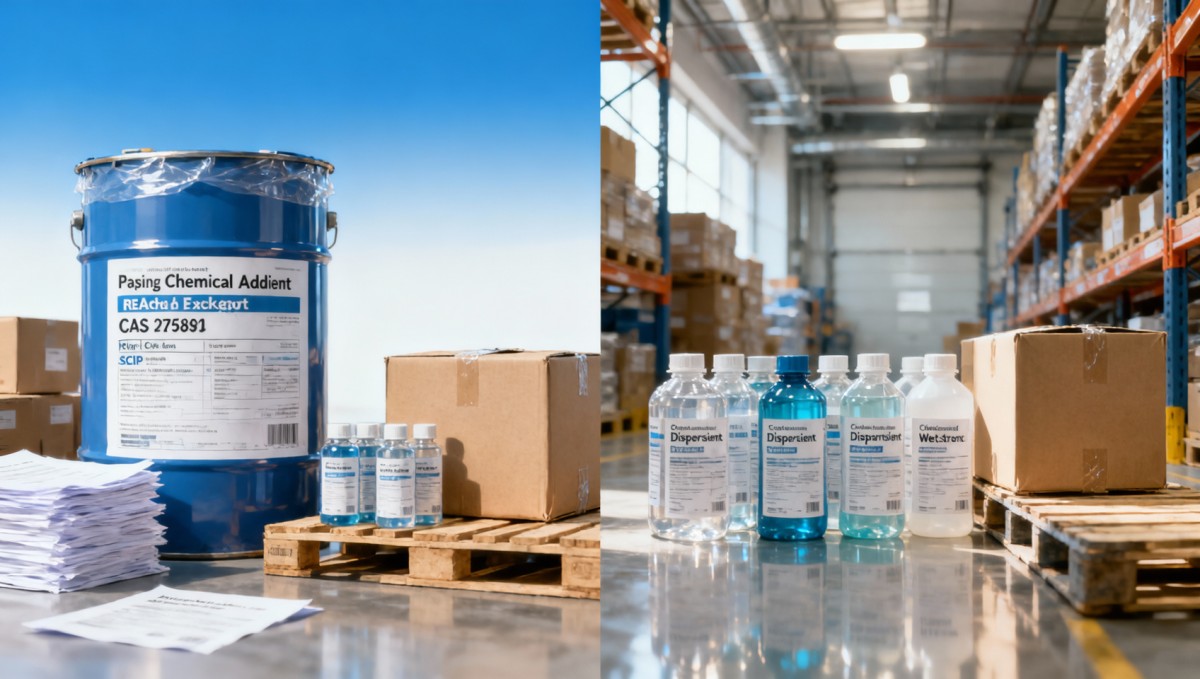
According to the information provided, the General Administration of Customs of China issued an announcement on July 20, 2026 on strengthening export compliance management for industrial chemical additives. It states that from August 1, 2026, all paper chemical aids exported to the EU, the UK, Canada, and Australia must carry a bilingual Chinese-English compliance label on the smallest sales package.
The required label content includes the CAS number, REACH or UK REACH pre-registration status, the SCIP notification number, and a manufacturer compliance declaration. The products covered include paper-use chemical aids such as defoamers, dispersants, and wet-strength agents.
The provided summary also states that the requirement has a direct impact on customs clearance efficiency and compliance costs for overseas importers.
Where the pressure is likely to appear in the trade chain
Export packaging and shipment release
From an industry perspective, exporters are the first group likely to feel the operational effect because the rule is linked to the smallest sales packaging rather than only to transport documents. That raises the importance of packaging review, label generation, and pre-shipment checking before goods move to customs clearance and overseas delivery.
What deserves closer attention is whether label content and shipment documentation remain aligned across product identity, compliance statements, and destination market requirements. Even without additional execution details in the provided information, the practical implication is that packaging becomes part of export readiness rather than a downstream presentation issue.
Importer clearance and buyer acceptance
For overseas importers and purchasing parties, the rule matters because the summary explicitly connects it with clearance efficiency and compliance cost. Analysis shows that buyers receiving covered paper chemical aids may pay closer attention to whether the smallest unit packaging already carries the required bilingual information, especially where import procedures and internal compliance checks are sensitive to missing or inconsistent declarations.
In business terms, this can affect receiving workflows, acceptance checks, and communication between exporters and foreign customers on what must appear on the package before dispatch.
Compliance support and documentation workflows
Compliance teams, certification-related service providers, and document management functions may also be affected because the required label content includes specific regulatory identifiers and declarations. Observably, this creates a stronger connection between labeling, regulatory records, and product documentation.
The main business risk point is not only whether a label exists, but whether the information shown on it is complete and internally consistent with the exporter's supporting materials. For firms handling multiple destinations, the destination-specific compliance status named in the requirement becomes a practical checkpoint in order processing and release control.
Operational points companies should review now
Check whether covered products are already mapped to compliant labels
Analysis shows that companies dealing in paper chemical aids should first identify which export SKUs fall within the products named in the requirement and whether the smallest sales packages already support bilingual labeling. This is a product-by-product and packaging-by-packaging review, not only a document review.
Reconcile label fields with regulatory and technical records
What deserves closer attention is the consistency of the required fields: CAS number, REACH or UK REACH pre-registration status, SCIP notification number, and manufacturer compliance declaration. If these fields are managed across separate teams or files, companies may need tighter internal checks before goods are packed and released.
Review delivery planning for destination markets named in the rule
Because the requirement specifically applies to exports to the EU, the UK, Canada, and Australia, companies should examine whether orders to these markets need revised packaging preparation, document review timing, or customer confirmation steps. The provided information does not define a detailed enforcement process, so this should be treated as a compliance planning issue that still requires close monitoring.
Watch for changes in execution language and customer-side requirements
Observably, the current information confirms the rule and its required label content, but it does not provide further detail on implementation practice beyond that. Companies should therefore continue tracking later official wording, customer compliance requests, tender document changes, and any market feedback that may shape how the requirement is checked in day-to-day trade execution.
How this development is best understood at this stage
Analysis shows that this is more than a routine customs notice because it moves compliance information onto the smallest sales package and ties packaging content more closely to export execution. At the same time, it is not yet appropriate to overstate the downstream market effect beyond what has been provided.
It is more appropriate to understand this as an already effective compliance change with immediate operational significance for covered exports, while also recognizing that the detailed execution approach and market response still need observation. For the industry, the key point is that labeling, regulatory status, and shipment preparation are now more visibly linked in this product segment.
What the market should take from the update
In practical terms, this development signals a clearer compliance threshold for paper chemical aid exports to the named markets. The immediate issue is not broad market restructuring, but whether exporters and their partners can align packaging, regulatory information, and delivery preparation in time for shipment.
Current observation suggests that the update should be read primarily as a landed rule change with direct trade execution implications, while the finer points of implementation, buyer response, and operational standardization remain areas to watch.
Basis of this article and what still needs verification
This article is based on the user-provided news title, event date, and event summary. Source types commonly relevant to developments of this kind include official announcements, publications from regulatory authorities, customs or trade administration releases, industry association updates, standards documents, and reporting by authoritative media.
A specific official source link was not provided in the input, so the exact source document path still requires follow-up verification. Further observation is also needed on later policy detail, compliance interpretation, tender document changes, industry feedback, and how companies implement the requirement in actual export operations.