


BLOG
CONTENTS
- EU REACH Tightens NPEOs Limit for Paper ImportsAug 09, 2026
- EU Enforces NPEOs Ban on Coated Paper ImportsAug 08, 2026
- EU REACH Restriction on NPEOs in Paper Coatings Takes EffectAug 07, 2026
- EU REACH Tightens Paper Chemical Rules From Aug. 15Aug 06, 2026
- ECHA Adds 3 SVHCs, Exporters Recheck DeclarationsAug 05, 2026
China Halts Ordinary Industrial Sulfuric Acid Exports from May 2026
Effective May 1, 2026, China has fully suspended exports of ordinary industrial sulfuric acid, permitting only special-approved shipments of high-value-added grades such as electronic-grade sulfuric acid. This policy shift directly impacts global phosphoric fertilizer production, copper hydrometallurgy, and downstream新能源 materials supply chains—making it critically relevant for fertilizer importers, non-ferrous metal processors, and battery material procurement teams.
Event Overview
As confirmed in official notices effective May 1, 2026, the People’s Republic of China has implemented a full suspension of exports for ordinary industrial sulfuric acid. Export authorization is now restricted exclusively to electronic-grade and other specially approved high-value-added sulfuric acid products. The measure contributes to an estimated 20% global supply gap for ordinary industrial-grade sulfuric acid, compounded by concurrent sulfur supply disruptions from the Middle East.
Industries Affected by Segment
Phosphoric Fertilizer Producers (e.g., in India, Brazil)
These producers rely heavily on imported industrial sulfuric acid for phosphate rock digestion. With China accounting for a significant share of global export volumes, the suspension has intensified input cost pressure—observed in rapid price increases for finished DAP and MAP fertilizers in key importing markets.
Copper Hydrometallurgical Operators (e.g., in Chile, Democratic Republic of Congo)
Wet-process copper extraction requires large volumes of dilute industrial sulfuric acid for leaching. The export halt constrains access to competitively priced acid feedstock, potentially delaying ramp-up of new leach plants or increasing operating costs at existing facilities dependent on Chinese-sourced acid.
Import-Dependent Fertilizer Traders & Distributors
Global fertilizer trading firms sourcing from Asia-Pacific supply chains face immediate logistics recalibration. Contract renewals, landed cost modeling, and inventory planning must now incorporate longer lead times and higher landed prices for acid-dependent formulations.
新能源 Materials Procurement Teams (e.g., cathode precursor suppliers)
While not direct consumers of industrial-grade acid, some battery material manufacturers source specialty acid intermediates via integrated Chinese chemical suppliers. The policy signals tighter allocation discipline across the broader sulfuric acid value chain—potentially affecting availability and pricing transparency for derivative reagents.
What Relevant Enterprises Should Monitor and Do Now
Track official clarifications on eligibility criteria for special approvals
Current guidance permits electronic-grade and other high-value-added sulfuric acid exports under special approval—but the definition of “high-value-added”, required documentation, and processing timelines remain unspecified. Importers should monitor announcements from China’s Ministry of Commerce and General Administration of Customs for operational clarity.
Evaluate regional alternative suppliers with verified capacity and compliance history
Procurement teams should prioritize due diligence on non-Chinese acid producers in Southeast Asia, Russia, and North Africa—focusing on ISO-certified production lines, export licensing status, and recent shipment performance—not just quoted prices.
Distinguish between policy announcement and physical supply impact timing
Although the policy takes effect May 1, 2026, existing export contracts may be honored through Q2 2026 depending on shipment dates and customs clearance windows. Companies should audit open purchase orders and shipping schedules rather than assume immediate disruption.
Initiate technical feasibility assessments for acid substitution or process adaptation
For phosphoric acid and copper leach operations, preliminary engineering reviews of alternative acid sources (e.g., recovered acid from smelters) or concentration adjustments should begin now—even if implementation remains medium-term—given typical lead times for equipment modification and regulatory review.
Editorial Perspective / Industry Observation
Observably, this export restriction functions less as an isolated trade measure and more as a structural signal: it reflects China’s ongoing recalibration of its chemical industry toward domestic value capture and strategic resource optimization. Analysis shows the move aligns with broader national policies promoting high-end manufacturing and critical material sovereignty—not merely short-term export control. From an industry perspective, the suspension is already yielding tangible supply-side effects (e.g., spot price spikes in India and Chile), confirming its status as an operational reality—not just a regulatory alert. However, the degree of long-term substitution success will depend less on policy reversal and more on how quickly alternative supply infrastructure scales outside China.
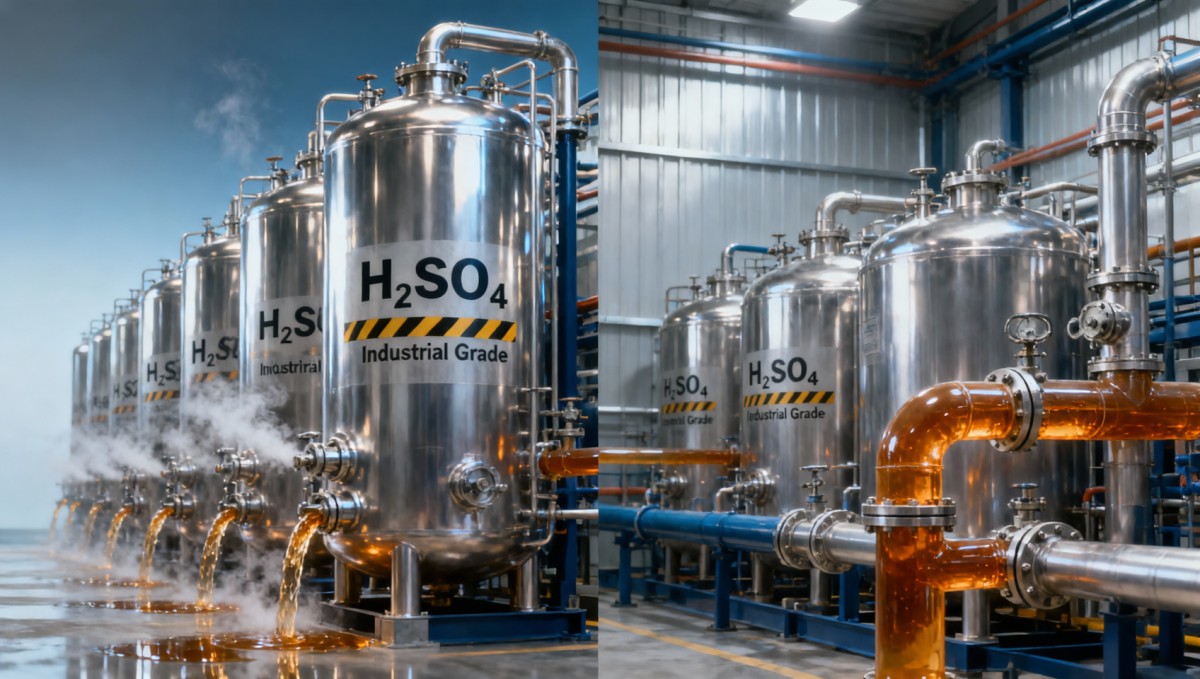
China’s decision underscores that sulfuric acid is no longer a commoditized bulk chemical in global supply chain planning—it is increasingly a strategic node. For affected industries, the current imperative is not speculation about policy duration, but disciplined reassessment of acid sourcing resilience across geography, grade specification, and contractual flexibility.
Information Sources: Official notices issued by China’s Ministry of Commerce and General Administration of Customs (effective May 1, 2026); publicly reported market responses from Indian fertilizer associations and Chilean copper commission bulletins. Note: Eligibility rules for special-approved exports remain under active clarification and require continued monitoring.