


BLOG
CONTENTS
- EU REACH Tightens NPEOs Limit for Paper ImportsAug 09, 2026
- EU Enforces NPEOs Ban on Coated Paper ImportsAug 08, 2026
- EU REACH Restriction on NPEOs in Paper Coatings Takes EffectAug 07, 2026
- EU REACH Tightens Paper Chemical Rules From Aug. 15Aug 06, 2026
- ECHA Adds 3 SVHCs, Exporters Recheck DeclarationsAug 05, 2026
FDA Adds 4 Defoamers to Food-Contact Paper List
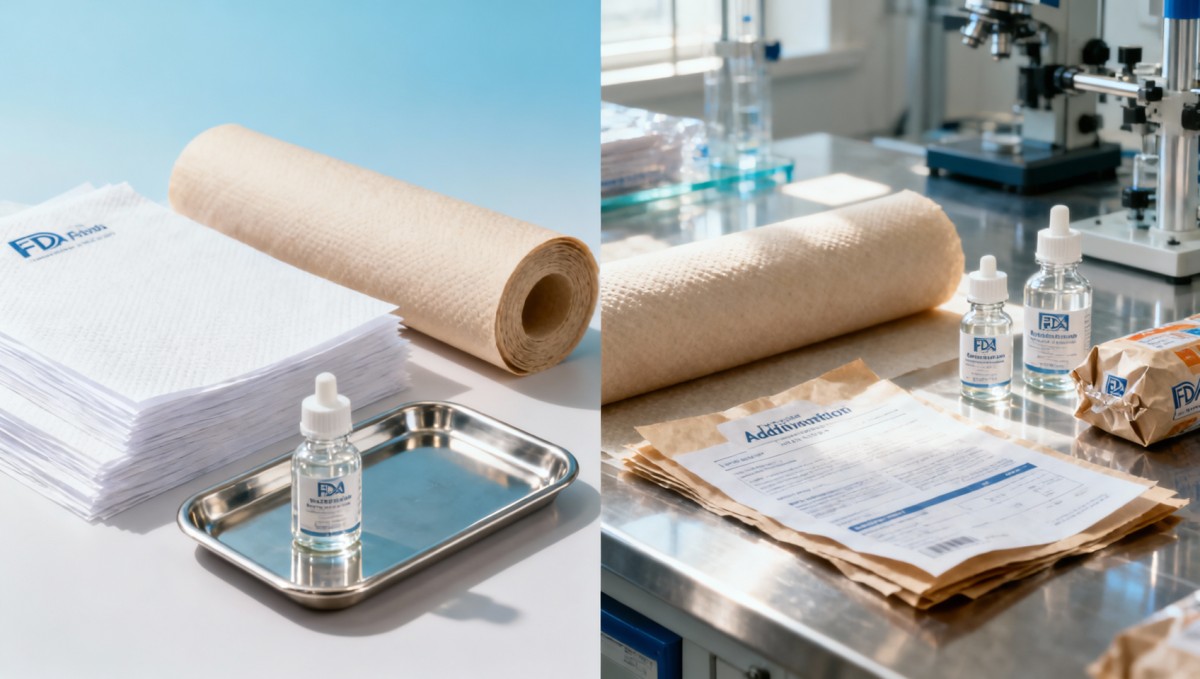
On July 14, 2026, the US FDA updated the compliance landscape for food-contact paper by issuing an amendment to Food Contact Notification (FCN) No. 1892. The change places four polyether-modified silicone defoamers on a temporary compliance list for additives used in food-grade paper, with permitted use in paper materials that directly contact food, including baking paper and fast-food wrapping paper. For exporters, paper converters, packaging buyers, and compliance teams serving the US market, the update matters because it can affect both documentation pathways and certification timing.
What the FDA update confirms
According to the provided information, the US FDA released an amendment to FCN No. 1892 on July 14, 2026. Under this amendment, four industrial defoamers based on polyether-modified silicone were added to a temporary compliance list for additives used in food-grade paper.
The permitted application scope stated in the input covers paper-based materials that directly contact food, specifically including baking paper and fast-food packaging paper. The information provided also indicates that this adjustment has a direct effect on the compliance route and certification preparation cycle for global suppliers exporting food packaging paper to the United States.
Where the impact is likely to be felt first
Export-facing paper suppliers and converters
From an industry perspective, suppliers shipping food-contact paper products to the US may be affected first because the update relates directly to the substances allowed in paper materials intended for direct food contact. The impact is likely to appear in product qualification, customer submissions, and preparation of compliance files tied to export orders.
What deserves closer attention is whether existing product lines for baking paper or fast-food wrapping paper involve these additive categories and how quickly technical and regulatory documentation can be aligned with the amended notification framework.
Raw material and additive sourcing functions
Procurement and sourcing teams may also need to reassess supplier documentation for additives used in paper production. Analysis shows that the practical effect is not only about whether a substance appears on a list, but also about whether the supporting paperwork, specifications, and supply consistency are sufficient for downstream compliance review.
For these teams, the key business link is upstream material verification. Any mismatch between a declared additive system and the documentation expected by US-facing customers could affect lead times or transaction certainty.
Brand owners and packaging buyers serving the US market
Buyers of food-contact paper packaging, especially those procuring direct-contact paper for food applications, may need to revisit supplier communication and qualification timelines. Observably, a temporary compliance recognition can influence purchasing decisions, but it does not remove the need for internal review, customer approval steps, or contract-level documentation checks.
The most relevant area here is supplier management: buyers will likely focus on whether current or planned packaging grades can be documented clearly for US market use and whether certification preparation remains on schedule.
Testing, certification, and supply chain service providers
Service providers involved in compliance support may see changes in project sequencing and client requests. The update is directly linked to certification preparation cycles, so the effect may show up in document review, submission readiness, and coordination between material suppliers and export clients.
What they need to watch is not just the wording of the amendment itself, but how customers interpret temporary compliance status in actual transaction and audit workflows.
What companies should watch now
Track any follow-up FDA wording carefully
Analysis shows that the immediate issue is not only the addition of four defoamers, but also how the temporary compliance recognition is described and applied in practice. Companies should monitor whether subsequent official wording, clarifications, or related interpretations change how customers or internal teams assess eligibility for specific paper grades.
Separate regulatory recognition from commercial readiness
What deserves closer attention is the difference between being listed under a temporary compliance framework and being fully ready for customer acceptance. In practical terms, businesses may still need to align specifications, declarations, and supporting records before the update translates into smoother shipments or shorter approval cycles.
Review product scope against direct food-contact uses
The update specifically concerns paper-based materials used in direct food contact, including baking paper and fast-food wrapping paper. Companies should therefore focus first on the paper categories most clearly connected to those use scenarios, rather than treating the news as automatically applicable across all paper packaging products.
Prepare documentation and customer communication in parallel
Observably, certification timing can be influenced as much by communication gaps as by regulatory text. Exporters, converters, and suppliers should be ready to explain how their materials relate to the amended FCN, what supporting documents are available, and where additional confirmation may still be needed during customer review.
How this update is best understood at this stage
Analysis shows that this development is best read as an actionable regulatory signal rather than a final market conclusion. The confirmed fact is that the FDA amendment has created a temporary compliance basis for four specified defoamers in food-grade paper applications. The broader business effect, however, still depends on how supply chains, customers, and compliance processes respond.
It is more appropriate to understand this as a near-term operational development with longer-term implications worth monitoring. The reason is straightforward: the update already matters for documentation and approval planning, but its full commercial effect will be shaped by execution at the supplier, buyer, and certification levels.
Why the market should keep this on the radar
This item is significant because it sits at the intersection of formulation, food-contact compliance, and export execution. It does not by itself confirm a broad market shift, but it does indicate a concrete change in how certain additives may be handled for food-contact paper entering the US market.
From a neutral industry reading, the most reasonable conclusion is that companies should treat this as a compliance-relevant update with immediate procedural value and continuing interpretive risk. That makes it neither a minor routine notice nor a fully settled endpoint.
Basis of this article
This article is based on the user-provided news title, event date, and event summary concerning the July 14, 2026 FDA amendment to FCN No. 1892 and the temporary compliance recognition of four polyether-modified silicone defoamers for food-contact paper applications.
For this type of industry update, commonly relevant source categories may include official regulatory notices, company disclosures, industry association releases, authoritative media reporting, and standards-related documents. A specific official source link was not provided in the input, so the exact document trail still requires ongoing verification. Continued attention should focus on any later official clarification, downstream customer interpretation, and practical effects on export compliance preparation.