


BLOG
CONTENTS
- EU REACH Tightens NPEOs Limit for Paper ImportsAug 09, 2026
- EU Enforces NPEOs Ban on Coated Paper ImportsAug 08, 2026
- EU REACH Restriction on NPEOs in Paper Coatings Takes EffectAug 07, 2026
- EU REACH Tightens Paper Chemical Rules From Aug. 15Aug 06, 2026
- ECHA Adds 3 SVHCs, Exporters Recheck DeclarationsAug 05, 2026
India's Phenol-Acetone Shutdown Widens Global Supply Gap
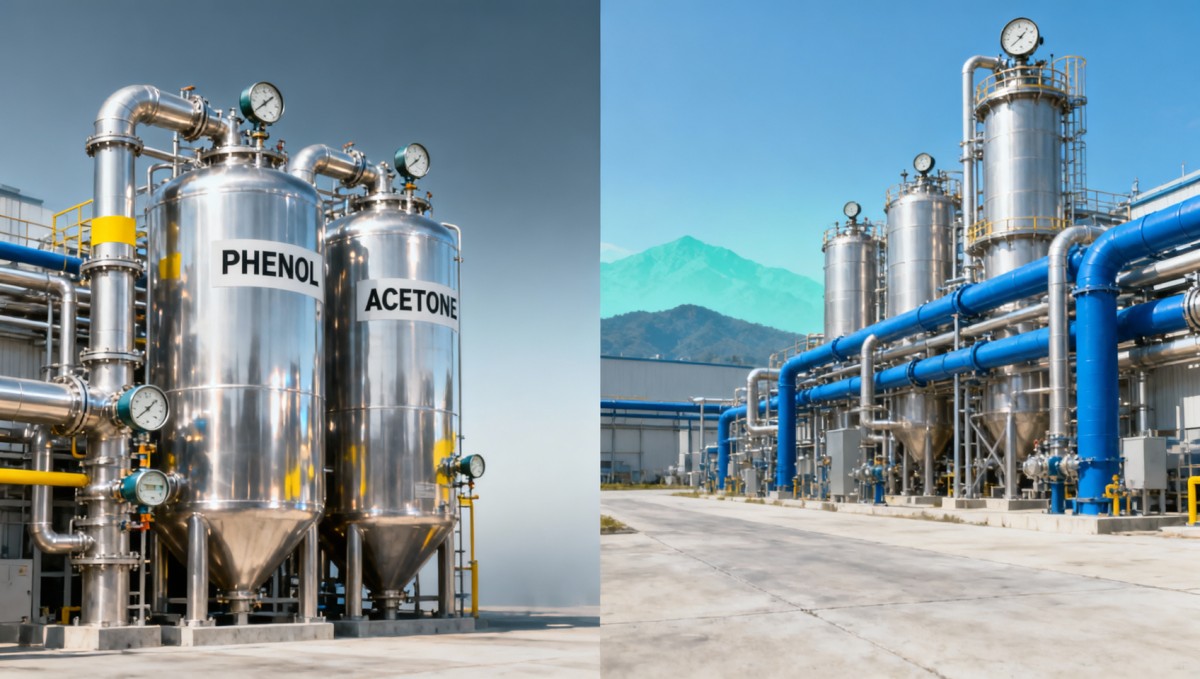
On April 26, 2026, Deepak Phenolics shut down its entire phenol (330,000 t/y) and acetone (220,000 t/y) production capacity at its Dahej site in India — triggering ripple effects across global phenol-acetone supply chains. Exporters, traders, and downstream processors in China, Southeast Asia, and Europe now face tighter availability, longer lead times, and upward pricing pressure — making this development highly relevant for chemical trading firms, polymer compounders, adhesive manufacturers, and procurement teams managing benzene- or cumene-derived intermediates.
Event Overview
On April 3, 2026, Deepak Phenolics initiated a production halt at its Dahej facility due to an uncontrollable interruption in propylene feedstock supply. By April 26, 2026, the company confirmed full and indefinite cessation of both phenol (330,000 tonnes per year) and acetone (220,000 tonnes per year) operations. No restart timeline has been announced. Public statements attribute the shutdown solely to force majeure affecting propylene supply — not operational, regulatory, or financial factors.
Industries Affected by Segment
Direct Trading Enterprises
Trading firms handling bulk phenol or acetone exports from China are experiencing heightened inquiry volume from European and Southeast Asian buyers previously sourcing from India. The impact manifests as increased price negotiation leverage: Chinese benchmark offers rose 28% since early March 2026, with confirmed deals now requiring 6–8 week delivery windows — up from 3–4 weeks historically.
Raw Material Procurement Teams
Enterprises sourcing phenol for bisphenol-A (BPA), caprolactam, or alkylphenol synthesis — especially those with dual-sourcing strategies including Indian supply — now face immediate reassessment of supplier concentration risk. Inventory buffers are under pressure, and spot-market allocations have tightened significantly since late April.
Downstream Processing Manufacturers
Producers of phenolic resins, acetone-based solvents, methyl methacrylate (MMA), and pharmaceutical intermediates report extended raw material lead times. For facilities operating on just-in-time inventory models, this creates scheduling uncertainty — particularly where Indian-origin material previously accounted for ≥15% of quarterly intake.
Supply Chain & Logistics Service Providers
Cargo forwarders and warehousing operators supporting phenol/acetone movements report rising demand for bonded storage solutions and expedited documentation handling — especially for shipments routed through Shanghai, Ningbo, and Guangzhou ports. Vessel space allocation for bulk liquid tankers on Asia–Europe routes has become more competitive post-April 26.
What Stakeholders Should Monitor and Act On
Track official updates from Deepak Phenolics and Indian petrochemical regulators
The force majeure declaration remains unmodified; however, any revision to its scope — such as partial resumption or alternative feedstock arrangements — would materially alter near-term supply expectations. Monitor press releases and Ministry of Chemicals and Fertilizers notifications for formal status changes.
Assess exposure to specific grade dependencies and regional alternatives
Not all phenol grades are interchangeable: electronic-grade phenol or low-moisture acetone may lack readily available non-Indian sources. Map current contracts against technical specifications — not just volume — and identify which applications carry highest substitution risk.
Review and stress-test existing logistics and inventory protocols
Lead time extensions to 6–8 weeks imply earlier reorder triggers and higher safety stock thresholds. Cross-check warehouse capacity, tank farm availability, and customs clearance readiness — particularly for imports requiring prior quality certification under China’s GB standards.
Engage proactively with Chinese suppliers on allocation terms, not just pricing
With supply constrained, priority access often hinges on order timing, payment terms, and long-term volume commitments — not solely unit cost. Evaluate whether contractual flexibility (e.g., rolling forecasts, staggered deliveries) improves allocation certainty over fixed-date bulk orders.
Editorial Perspective / Industry Observation
This event is best understood not as an isolated outage, but as a structural stress test for global phenol-acetone supply resilience. Analysis来看, the Dahej shutdown exposes latent dependencies on single-region production hubs — especially where feedstock infrastructure (e.g., integrated propylene supply) remains fragmented. From industry角度, it signals growing vulnerability in mid-stream aromatics derivatives, where capacity additions outside China and the U.S. have stalled since 2022. Current更值得关注的是 how quickly alternative sourcing — such as incremental exports from U.S. Gulf Coast plants or ASEAN blending hubs — can scale without logistical bottlenecks. It is not yet a systemic shortage, but rather a localized inflection point that amplifies pricing power for incumbent exporters with available volume.
In summary, the Dahej shutdown has shifted short-term market dynamics from balanced to supply-constrained — elevating China’s export positioning while compressing procurement flexibility across multiple end-user sectors. It should be interpreted not as a permanent realignment, but as a temporary tightening demanding tactical recalibration: one rooted in verified supply constraints, not speculative sentiment.
Source: Official announcement by Deepak Phenolics (April 26, 2026); public pricing data from China’s National Chemical Information Center (NCIC), compiled April 2026. Ongoing monitoring required for potential feedstock restoration timelines and secondary capacity responses — neither confirmed nor estimated as of publication.