


BLOG
CONTENTS
- EU REACH Tightens NPEOs Limit for Paper ImportsAug 09, 2026
- EU Enforces NPEOs Ban on Coated Paper ImportsAug 08, 2026
- EU REACH Restriction on NPEOs in Paper Coatings Takes EffectAug 07, 2026
- EU REACH Tightens Paper Chemical Rules From Aug. 15Aug 06, 2026
- ECHA Adds 3 SVHCs, Exporters Recheck DeclarationsAug 05, 2026
Jilin Zijin Copper Raises 93% Sulfuric Acid Export Price
Jilin Zijin Copper Co., Ltd. raised its ex-factory price for 93% sulfuric acid by RMB 200/ton to RMB 2,090/ton on May 2, 2026 — the first major price adjustment following China’s nationwide suspension of sulfuric acid exports effective May 1, 2026. This move directly affects sulfuric acid buyers in fertilizer production and battery material manufacturing across Southeast Asia, South America, and the Middle East, introducing simultaneous pressure on procurement budgets and delivery timelines.
Event Overview
On May 2, 2026, Jilin Zijin Copper announced an increase of RMB 200 per ton in the ex-factory price of 93% sulfuric acid, setting the new level at RMB 2,090/ton. This is confirmed as the first pricing action by a leading domestic supplier after China’s formal implementation of a full export suspension for sulfuric acid starting May 1, 2026. Market reports indicate acute domestic spot shortages, with most producers holding no saleable inventory; the export window is effectively closed. Overseas importers are now reassessing both delivery reliability from Chinese suppliers and potential alternative sourcing strategies.
Impact on Specific Industry Segments
Direct Trading Enterprises
Trading firms that historically sourced and resold Chinese sulfuric acid face immediate margin compression and contract renegotiation challenges. With no new export licenses issued and zero available cargo, forward booking is no longer feasible — rendering existing trade frameworks operationally unworkable.
Raw Material Procurement Enterprises
Fertilizer plants (especially phosphoric acid and DAP/MAP producers) and cathode material manufacturers relying on imported 93% sulfuric acid must revise Q2 procurement budgets and extend lead times. Spot availability is absent, and even previously committed shipments are subject to indefinite delay or cancellation.
Processing & Manufacturing Enterprises
Downstream processors using sulfuric acid as a reagent — including certain cobalt/nickel sulfate refiners and titanium dioxide producers — may encounter intermittent feedstock supply, potentially triggering production rate adjustments or temporary line slowdowns if alternative acid grades or sources cannot be qualified quickly.
Supply Chain Service Providers
Freight forwarders, customs brokers, and logistics coordinators handling sulfuric acid shipments out of Chinese ports report near-zero new booking volume. Their service scope is shifting toward documentation support for canceled orders and compliance verification for residual pre-suspension shipments still in transit.
What Relevant Enterprises or Practitioners Should Focus On
Monitor official policy implementation details and exemptions
While the export suspension is stated as ‘comprehensive’, regulatory language may allow for narrow exceptions (e.g., humanitarian aid shipments, pre-approved long-term contracts). Companies should track announcements from MOFCOM and GACC for any clarifying notices or application procedures — not assume blanket applicability without verification.
Assess exposure by grade, destination, and contractual term
Not all sulfuric acid grades or end markets are equally affected. Buyers should map current contracts against the suspended scope (confirmed: 93% concentration, HS Code 2807 00 10), flag shipments destined to jurisdictions under active sanctions review, and prioritize renegotiation of delivery clauses where force majeure provisions were not previously activated.
Distinguish between policy signal and operational reality
The May 1 suspension is a regulatory threshold, but actual port-level enforcement, customs clearance delays, and inland transport restrictions may vary regionally. Companies should treat early May shipment rejections as indicative — not conclusive — of full enforcement consistency, and maintain real-time communication with local agents at key ports (e.g., Dalian, Qingdao, Tianjin).
Activate contingency planning for feedstock qualification and logistics rerouting
Procurement teams should initiate parallel evaluation of non-Chinese acid sources (e.g., Vietnamese, Russian, or Moroccan producers) — focusing on technical compatibility (purity, iron content, arsenic limits), lead time, and Incoterms alignment. Simultaneously, logistics managers should verify vessel availability and port acceptance policies for alternative origins, particularly given tightening global container and tanker capacity in the sulfuric acid segment.
Editorial Perspective / Industry Observation
Observably, this price adjustment is less a commercial decision and more a market-clearing response to an abrupt regulatory cutoff: Jilin Zijin’s move reflects scarcity-driven pricing rather than demand-led momentum. Analysis shows the RMB 200/ton hike aligns closely with estimated cost-of-carry and opportunity cost for domestic producers now unable to monetize export-grade inventory. From an industry perspective, the event signals a structural shift — not a temporary dislocation. It marks the first visible consequence of China’s formal exit from global sulfuric acid trade, moving beyond prior de facto constraints (e.g., rail quotas, environmental inspections) to explicit administrative prohibition. Current conditions suggest limited near-term reversal; sustained monitoring of domestic production data and provincial-level enforcement patterns will be more informative than waiting for headline policy revisions.
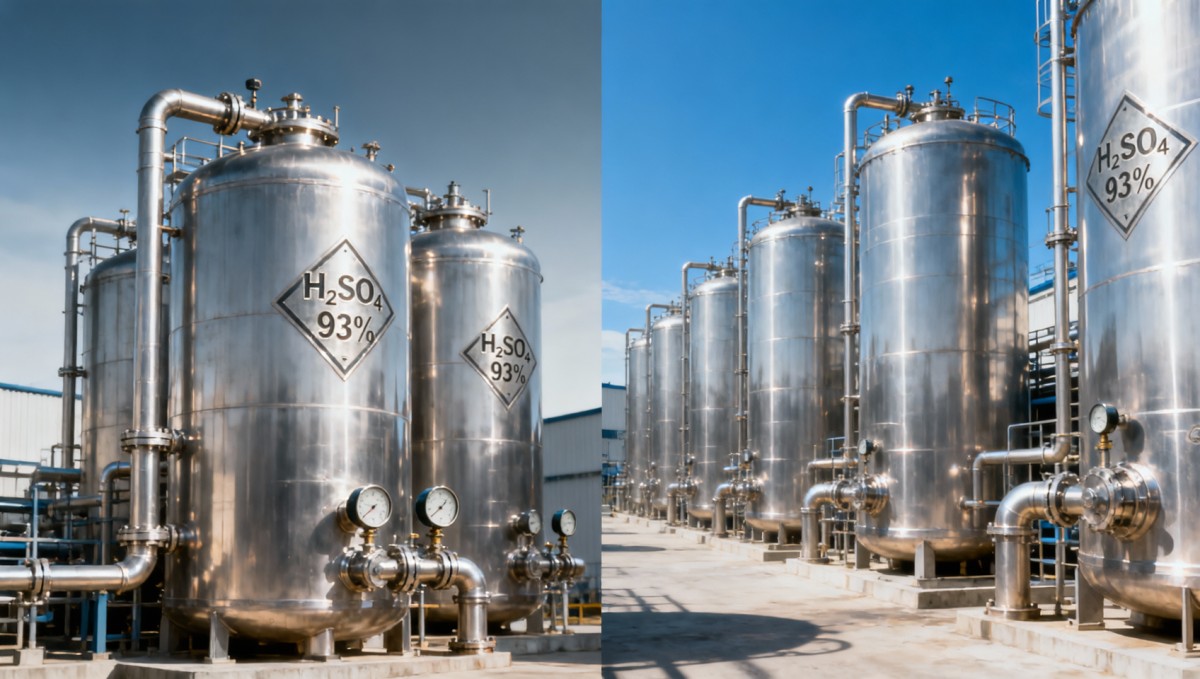
In summary, the Jilin Zijin price revision is not merely a pricing update — it is a concrete indicator of China’s completed withdrawal from sulfuric acid export markets. For international buyers, it confirms that reliance on Chinese supply for 93% acid is no longer viable under current policy. The situation is best understood not as a short-term bottleneck, but as a permanent recalibration of regional sulfuric acid sourcing architecture — one requiring verified alternatives, technical validation, and revised contractual frameworks.
Source: Official pricing notice issued by Jilin Zijin Copper Co., Ltd. on May 2, 2026; supplementary market intelligence from domestic sulfuric acid trading platforms and port customs bulletins dated May 1–2, 2026. Note: Ongoing observation is required regarding potential provincial-level enforcement variations and possible exemption mechanisms — neither confirmed nor ruled out as of publication.