


CONTENTS
- Brazil Mulls Doubling Tariffs on Low-Cost Paper ImportsAug 17, 2026
- China’s Paper Industry to Join Carbon Market in Phases, Raising Export Compliance PressureAug 16, 2026
- China’s Paper Sector to Enter the National Carbon Market in 2026, Raising Export Compliance PressureAug 15, 2026
- China Paper Exports Jump 92.5% in Jan-MayAug 14, 2026
- The EU's PPWR enters into force today, raising compliance thresholds for paper-based packaging exported to the EU.Aug 13, 2026
China’s New Carbon Footprint Requirement for Imported Waste Paper Takes Effect June 1, 2026
Starting June 1, 2026, China will require carbon footprint certification for all imported paper and paper products made from waste paper or recycled pulp — affecting exporters across North America, Europe, Japan, South Korea, and Southeast Asia. This regulatory shift signals a material change in compliance expectations for global suppliers engaged in the再生 fiber supply chain to China.
Event Overview
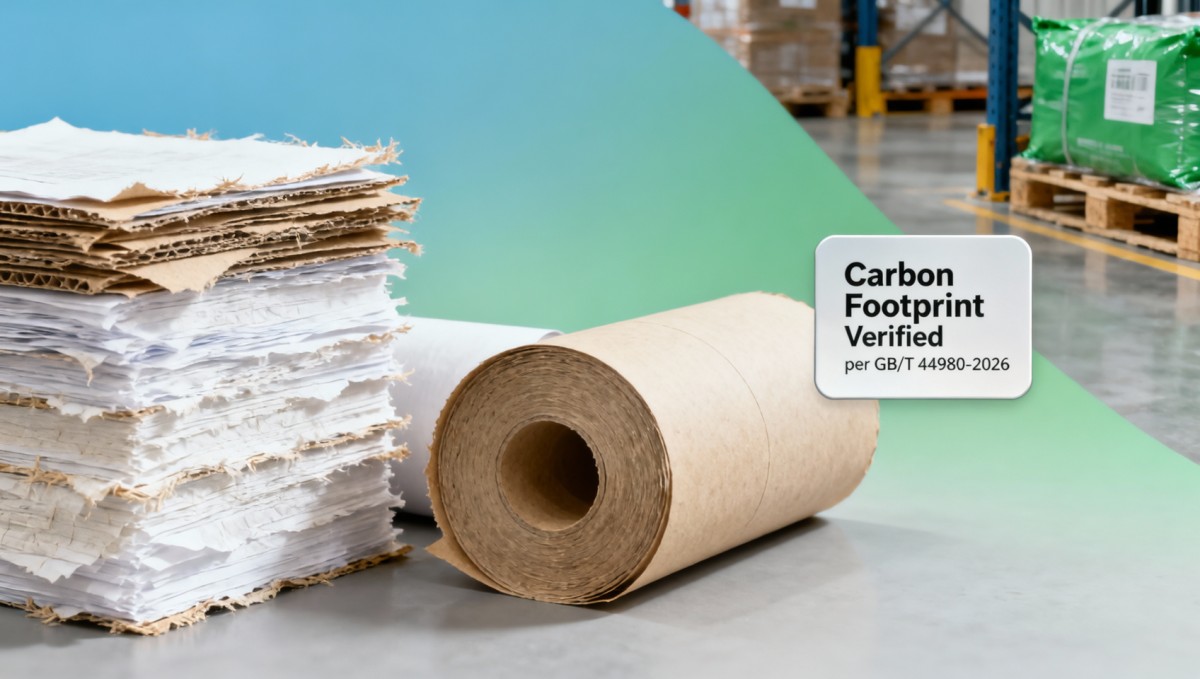
The Ministry of Ecology and Environment and the General Administration of Customs jointly issued the Interim Measures for Carbon Labeling Management of Imported Recycled Fiber Raw Materials. Effective June 1, 2026, all imports of paper and paper products derived from waste paper or recycled pulp must be accompanied by a carbon footprint report issued by a CNAS-accredited institution, and must comply with GB/T 44980-2026, Guidelines for Quantification and Disclosure of Carbon Footprint of Recycled Paper Products. Shipments failing to meet these requirements will not be accepted for customs declaration.
Industries Affected by This Regulation
Direct Exporters of Recycled Paper Products
Exporters supplying finished paper, board, or tissue products to China — especially those sourcing from recovered fiber — face immediate compliance obligations. The requirement applies regardless of product origin or export destination within China, meaning even indirect shipments via third-country logistics hubs may trigger verification needs.
Recycled Pulp Producers and Suppliers
Manufacturers of deinked pulp (DIP) or mechanical recycled pulp exporting to Chinese paper mills must now ensure their upstream carbon accounting aligns with GB/T 44980-2026. Since the regulation covers both final products and intermediate inputs (e.g., recycled pulp), pulp producers become subject to scope 1–3 emissions reporting aligned with Chinese methodology.
International Trading and Logistics Service Providers
Freight forwarders, customs brokers, and trade finance institutions handling China-bound recycled fiber shipments will need to verify documentation integrity pre-arrival. Absence of a valid CNAS-recognized carbon footprint report will halt customs clearance — increasing lead time risk and documentary review workload.
Downstream Chinese Paper Converters and Brand Owners
Domestic converters relying on imported recycled content for packaging or hygiene papers must now validate supplier certifications prior to procurement. Failure to do so may result in inbound shipment rejection, production delays, or non-compliance exposure under China’s broader green supply chain accountability framework.
What Relevant Enterprises or Practitioners Should Monitor and Do Now
Track official interpretations and implementation guidance
While the regulation is effective June 1, 2026, CNAS accreditation criteria for carbon footprint verification bodies, as well as detailed interpretation notes on GB/T 44980-2026, remain pending. Enterprises should monitor announcements from the Ministry of Ecology and Environment and CNAS for technical clarifications — especially regarding boundary definitions (e.g., whether transport emissions to port are included) and data validity periods.
Identify high-exposure product categories and supply routes
Not all paper grades carry equal risk. Exports of uncoated recycled writing paper, corrugated medium, and fluting stock — commonly sourced from mixed-waste streams with variable energy inputs — may face heightened scrutiny. Companies should map current China-bound SKUs against likely verification complexity and prioritize certification for top-volume lines first.
Distinguish policy signal from operational readiness
This rule reflects China’s formalization of environmental due diligence in raw material imports — but its enforcement will depend on customs system integration and verifier capacity. Early adopters should treat it as a compliance milestone, not an immediate operational bottleneck; however, delayed preparation risks last-minute bottlenecks in Q2 2026.
Initiate supplier engagement and internal documentation alignment
Exporters should begin coordinating with CNAS-accredited verifiers (a limited pool outside China) and align internal data collection systems with GB/T 44980-2026’s activity-based calculation rules. Concurrently, procurement teams in China should update vendor questionnaires to include carbon footprint report validity, issuance date, and scope coverage — ahead of the June 2026 deadline.
Editorial Perspective / Industry Observation
Observably, this measure is less about immediate trade restriction and more about institutionalizing lifecycle environmental accountability into China’s import control architecture. Analysis shows it serves dual functions: (1) reinforcing domestic circular economy goals by raising the bar for imported recycled content quality, and (2) creating a traceable data foundation for future carbon border adjustments or preferential treatment under China’s green procurement policies. From an industry perspective, it marks a structural pivot — where environmental performance is no longer a voluntary ESG add-on but a mandatory entry condition for market access. It is currently best understood as a binding regulatory signal with phased operational impact, rather than an already enforced barrier.
Conclusion: This regulation does not alter China’s openness to recycled fiber imports, but redefines the terms of engagement. Its significance lies in embedding carbon accountability into customs procedures — shifting compliance from end-product standards to upstream process transparency. For global stakeholders, it is more appropriately interpreted as the beginning of a standardized, auditable green trade pathway — one that rewards early alignment over reactive adaptation.
Source Information:
• Ministry of Ecology and Environment of the People’s Republic of China
• General Administration of Customs of the People’s Republic of China
• Interim Measures for Carbon Labeling Management of Imported Recycled Fiber Raw Materials (effective June 1, 2026)
• GB/T 44980-2026, Guidelines for Quantification and Disclosure of Carbon Footprint of Recycled Paper Products
Note: Implementation details — including list of CNAS-accredited verification bodies and official guidance on boundary application — remain pending and require ongoing observation.