


BLOG
CONTENTS
- Brazil Mulls Doubling Tariffs on Low-Cost Paper ImportsAug 17, 2026
- China’s Paper Industry to Join Carbon Market in Phases, Raising Export Compliance PressureAug 16, 2026
- China’s Paper Sector to Enter the National Carbon Market in 2026, Raising Export Compliance PressureAug 15, 2026
- China Paper Exports Jump 92.5% in Jan-MayAug 14, 2026
- The EU's PPWR enters into force today, raising compliance thresholds for paper-based packaging exported to the EU.Aug 13, 2026
Indonesia E-Commerce Rule Forces Fee Transparency
Indonesia’s revised e-commerce transaction rules will take effect on July 1, 2026, requiring B2B and B2C platforms operating in the country to disclose the full cost breakdown for cross-border goods. For paper-product exporters shipping directly to Indonesian small and mid-sized distributors, the change is worth close attention because it directly touches pricing structure, landed-cost communication, and compliance-related delivery arrangements.
What the revised rule now requires
According to the provided information, Indonesia’s Ministry of Trade completed revisions to the E-Commerce Transaction Regulation on June 7, 2026. From July 1, 2026, all B2B and B2C platforms operating in Indonesia, including platforms such as Alibaba, Beautetrade, and Tradewheel, must publicly display all fee components for cross-border goods.
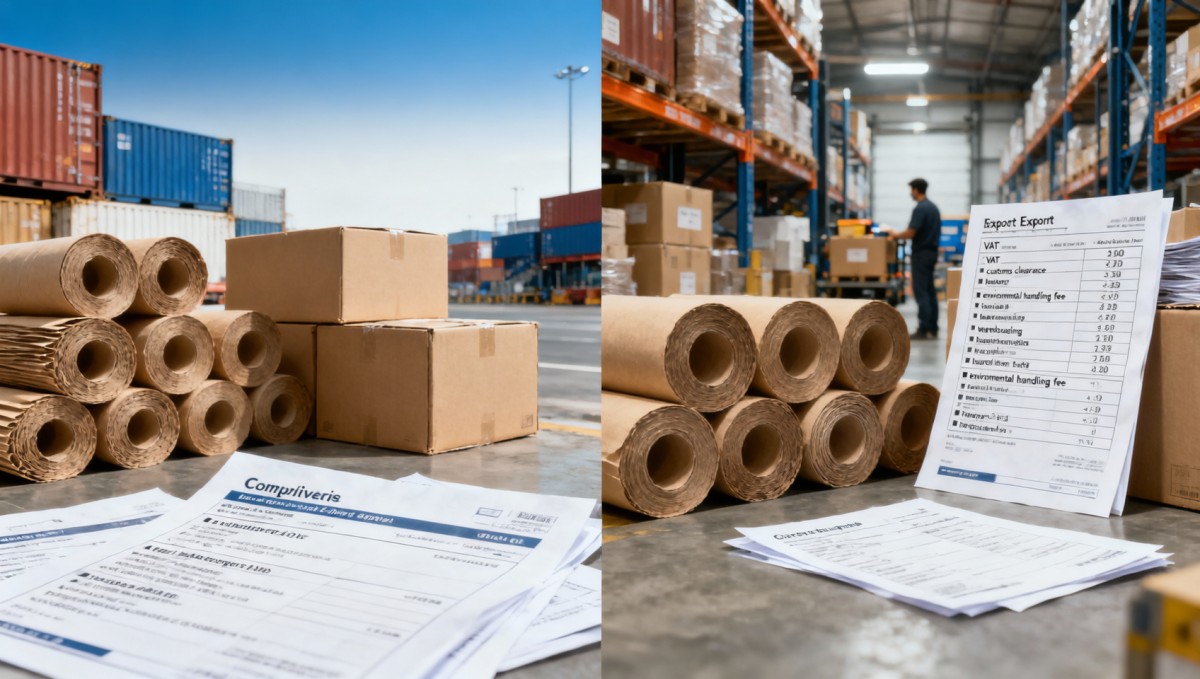
The required disclosures include customs clearance service charges, local value-added tax (VAT), warehousing surcharges, and, for paper products, a product-specific environmental handling fee. The information provided also states that this provision will directly affect the quotation models and compliant delivery processes used by Chinese paper exporters serving Indonesian small and medium-sized distributors.
Where the operational impact is likely to appear
Pressure shifts first to export quotations
From an industry perspective, direct trade companies selling paper products into Indonesia are likely to feel the change most clearly in quotation design. Once platforms must show each charge separately, suppliers can no longer rely on loosely bundled pricing when communicating cross-border costs to downstream buyers.
Distributor-facing transactions become more document-sensitive
For businesses serving small and medium-sized distributors in Indonesia, the impact may appear in customer communication and order confirmation. Analysis shows that when fee items become visible at platform level, mismatches between quoted prices, declared charges, and delivery-related explanations may become more noticeable in actual transactions.
Service providers may face tighter coordination demands
Supply chain and fulfillment service providers may also be affected because customs-related charges, warehousing add-ons, and product-specific paper fees are now part of the visible transaction structure. What deserves closer attention is whether all operational parties are using the same cost logic and delivery assumptions when supporting cross-border orders.
Practical points companies should review now
Recheck whether pricing templates match disclosed fee items
Companies involved in direct mail or platform-based cross-border paper sales should review whether their current quotation models clearly reflect customs clearance fees, local VAT, warehousing surcharges, and any environmental handling fee tied to paper goods. This is a practical issue, not just a policy-reading exercise.
Separate policy wording from transaction execution
Observably, a rule that requires disclosure does not automatically resolve how each fee is presented in daily transactions. Businesses should therefore pay attention to the difference between formal regulatory wording and how platforms actually implement fee display, checkout presentation, and order-level breakdowns after July 1, 2026.
Review compliance documents and delivery handoffs
Because the provided information links the rule directly to compliant delivery processes, exporters and service partners should check whether the supporting documents, declared charge categories, and handoff procedures used in fulfillment remain consistent with what Indonesian buyers see on platform interfaces.
Prepare clearer buyer communication for SME distributors
For sellers targeting Indonesian small and medium-sized distributors, closer attention should go to pre-sale communication and post-order clarification. If visible fee lines change how buyers read the total landed cost, commercial discussions may shift from headline price to charge composition.
Why this matters beyond a single platform update
Analysis shows that this development is more than a routine interface adjustment because the required disclosures cover multiple cost layers tied to cross-border fulfillment. For the paper products segment in particular, the inclusion of an environmental handling fee suggests that category-specific charges can become a more visible part of transaction presentation.
It is more appropriate to understand this as a concrete compliance-related change with immediate commercial implications, while also treating it as a signal that cost transparency in cross-border platform trade deserves continued monitoring. At this stage, the provided information does not justify broader conclusions beyond that.
How the market may need to read this change
In practical terms, the rule matters because it pushes fee transparency from back-end calculation into front-end transaction visibility. For paper-product exporters and their Indonesian channel counterparts, the near-term issue is not whether costs exist, but how transparently, consistently, and compliantly those costs are shown and explained.
A balanced reading is that this is an immediate operational adjustment with possible longer-term signaling value. It should not be overstated as a complete reshaping of cross-border trade, but it should be treated as a change that can directly affect pricing discipline and transaction coordination from July 1, 2026.
Basis of this article and what still needs verification
This article is generated from the user-provided news title, event date, and event summary. For this type of development, commonly relevant source categories may include official government notices, company announcements, industry association updates, authoritative media coverage, and regulatory or standards-related documents.
No specific official source link was provided in the input, so the exact official link still requires follow-up verification. Further observation should focus on any additional official wording, platform-side implementation details, and whether there are subsequent clarifications affecting cross-border paper-product transactions into Indonesia.