products
‹
›
‹
›
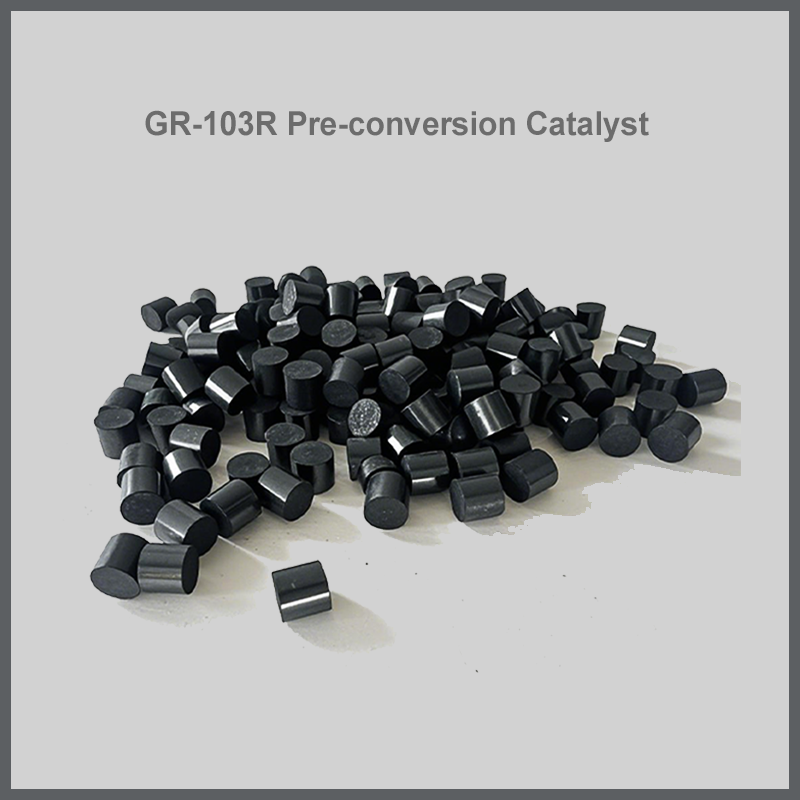
GR-103R Pre-reformation Catalyst
This catalyst is primarily used in production processes using light oil, liquefied petroleum gas, refinery gas, and natural gas as feedstocks. It converts higher hydrocarbons (such as propane, butane, and naphtha) into methane- and hydrogen-rich syngas in an adiabatic reactor, providing an ideal feedstock for the downstream main reforming process. Its key features are its extremely high conversion activity and excellent stability. It operates stably under demanding conditions of high space velocity and low water-to-carbon ratios, maintaining high activity even at relatively low temperatures, significantly reducing plant energy consumption.
Product Description
1)GR-103R pre-conversion catalyst is a high-nickel system catalyst, nickel is loaded ona porous carrier, and has excellent low-temperature adiabatic pre-conversion activity for hydrocarbons team.
2)It is suitable for the reaction process of producing methane-rich gas with light oil, liquefied gas, refinery gas, and natural gas as raw materials.
3)High conversion activity and good activity stability: high space velocity, low water- carbon ratio, good activity and stability at low temperature.
4)Adiabatic pre-conversion: carried out in an adiabatic reactor, with high reaction thermal efficiency.
5)No carbon deposition reaction occurs under low water-carbon ratio conditions. 6)There are basically no hydrocarbons above c2in the reaction product.
7)Long service life.
Product Parameters
FAQ
1.What role does the pre-reforming step play in the entire hydrogen/ammonia production plant?
It is the "frontier" of the entire process, responsible for converting heavier hydrocarbons in the feedstock (such as naphtha and LPG) into a methane- and hydrogen-rich mixture under relatively mild conditions. This reduces the heat load on the downstream steam reformer, optimizes operating conditions across the reactor, and achieves energy savings and cost reductions.

2.Why is the GR-103R catalyst so effective in resisting carbon deposition at low water-to-carbon (S/C) ratios?
This is due to its high nickel content, specialized promoter system, and optimized support structure. The high nickel content ensures extremely high hydrogenolysis activity, the promoter promotes the water-gas reforming reaction and promptly removes surface carbon precursors, and the optimized support structure facilitates the diffusion of reactants and products, collectively preventing carbon deposition.
3.What does "adiabatic" pre-reforming mean? How does it differ from isothermal reforming?
"Adiabatic" means that there is no heat exchange between the reactor and the outside world. The heat generated by the reaction itself is entirely used to raise the temperature of the reactants themselves, resulting in significantly higher outlet temperatures than inlet temperatures. Isothermal reforming, on the other hand, maintains a constant temperature within the reactor through external heat exchange. The adiabatic design simplifies the reactor structure and improves heat utilization efficiency.
4.What is the feedstock compatibility of this catalyst?
The GR-103R catalyst has a wide adaptability and can process a variety of feedstocks, from light natural gas and refinery gas to heavier liquefied petroleum gas (LPG) and light oils (such as naphtha), providing a key guarantee for the plant's feedstock flexibility.
5.How can I determine if the pre-reforming catalyst is deactivated or needs replacement?
Key monitoring indicators include:
① A decrease in the reactor inlet and outlet temperature rise (decreased reaction activity);
② An abnormally high content of higher hydrocarbons (C2+) in the outlet process gas, and
③ A significant increase in system pressure drop (possibly due to pulverization or carbon deposition).
When these indicators exceed the process tolerances, catalyst replacement should be considered.
Request a Quote
Related Recommendations