


BLOG
CONTENTS
- Deepak Phenolics India Shutdown Causes Global Phenol ShortageApr 23 2026
- 200+ Chinese Chemical Plants Suspend Quotations Amid Supply UncertaintyApr 23 2026
- Polyacrylamide (PAM) for Wastewater Treatment: The Complete Flocculation GuideJan 20 2026
- The Ultimate Guide to Polyacrylamide in Papermaking: Enhance Quality, Reduce Costs, and Choose the Right SupplierJan 19 2026
- The Unique Strengths of Precious Metal CatalystsNov 14 2025
200+ Chinese Chemical Plants Suspend Quotations Amid Supply Uncertainty
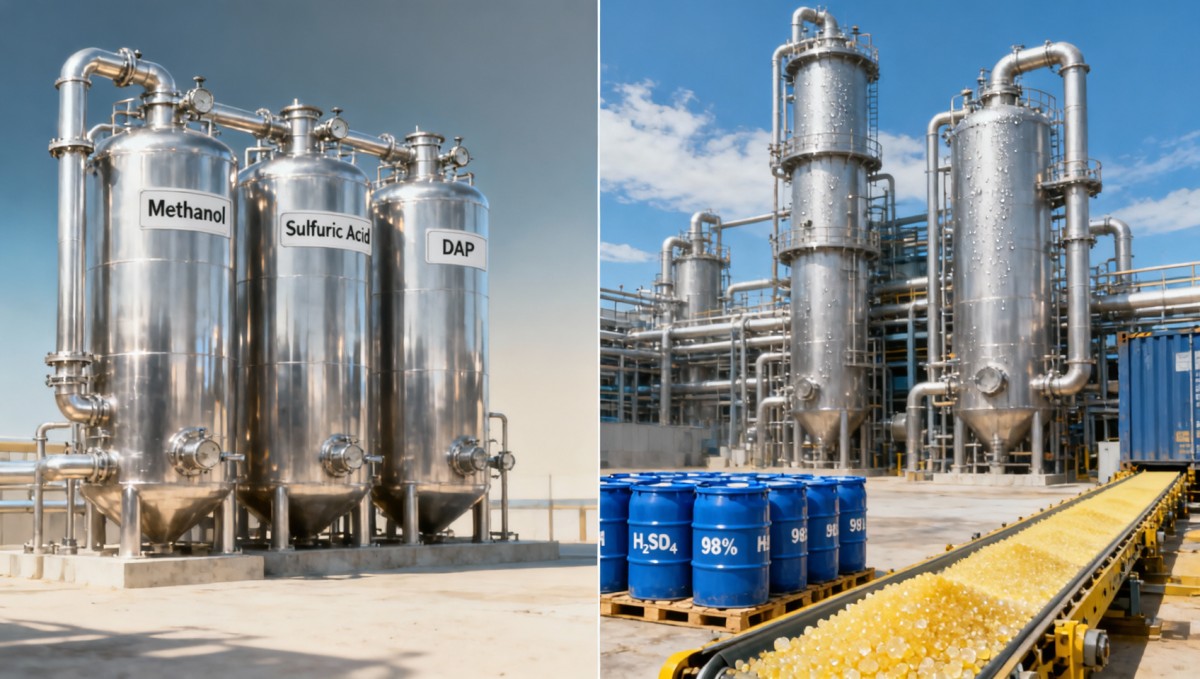
Over 200 major Chinese chemical manufacturers—including Shandong Haihua, Jingbo Petrochemical, and Huangshan Yuanrun—collectively suspended external quotations for key raw materials such as methanol, sulfur, sulfuric acid, and diammonium phosphate (DAP) from April 20 to April 22, 2026. This development directly affects global buyers in agrochemicals, fertilizers, industrial chemicals, and downstream manufacturing sectors—and signals a structural shift in pricing negotiation dynamics for April–May 2026 orders.
Event Overview
As of April 22, 2026, more than 200 mainstream chemical enterprises across China have paused public quotations for over 200 raw material grades, including methanol, sulfur, sulfuric acid, and phosphate-based fertilizers like DAP. The suspension occurred between April 20 and April 22, 2026. Publicly confirmed participants include Shandong Haihua, Jingbo Petrochemical, and Huangshan Yuanrun. The stated primary driver is supply chain disruption and sharp cost volatility stemming from the evolving Middle East situation, particularly affecting imported feedstock availability and landed costs.
Impact on Specific Industry Segments
Direct Trading Enterprises
These firms rely on real-time quotation data to execute spot trades and forward contracts. With quotations suspended, price discovery is impaired, increasing counterparty risk and delaying trade confirmation. Impact manifests in extended deal cycles, wider bid-ask spreads, and heightened reliance on bilateral negotiations rather than published benchmarks.
Raw Material Procurement Enterprises
Manufacturers sourcing methanol, sulfur, or sulfuric acid for internal production face immediate uncertainty in input cost forecasting. Budget variance risks rise, especially for cost-sensitive segments like generic agrochemical formulation or commodity-grade industrial acids. Procurement teams report delays in vendor qualification and increased scrutiny of minimum order quantity (MOQ) flexibility.
Processing & Manufacturing Enterprises
Downstream converters—including fertilizer blenders, formaldehyde producers, and battery electrolyte makers—face cascading effects: delayed raw material intake schedules, potential batch rescheduling, and revised working capital planning. Those operating under fixed-price customer contracts may experience margin compression if input cost increases are not contractually adjustable.
Supply Chain & Logistics Service Providers
Firms offering freight forwarding, bonded warehousing, or customs brokerage for chemical imports see elevated inquiry volume—but also increased documentation complexity. Clients are requesting contingency plans for alternative origin sourcing and accelerated customs clearance support, particularly for sulfur and phosphate intermediates with narrow import windows.
Key Considerations and Practical Responses for Affected Businesses
Monitor official communications from China’s Ministry of Commerce and General Administration of Customs
Any policy-level response—including tariff adjustments, import license prioritization, or temporary quota allocations—will likely be announced through these channels. Subscribing to their official bulletins enables early identification of regulatory signals distinct from market-driven pauses.
Track quotation status for priority SKUs only—not broad categories
Not all grades within ‘methanol’ or ‘sulfuric acid’ are equally affected. Focus monitoring on specific CAS numbers or technical grades tied to your procurement contracts (e.g., GB/T 338-2021 Grade A methanol; 98% H₂SO₄ industrial grade). Avoid generalizations that dilute actionable intelligence.
Distinguish between quotation suspension and production halt
The current action involves pricing transparency—not output cessation. Plants remain operational, and some may still accept firm orders via direct negotiation. Confirm with suppliers whether existing contracts remain valid, and whether MOQ or payment terms have been adjusted unilaterally.
Activate dual-sourcing protocols for critical inputs
For sulfur, methanol, or DAP-dependent lines, verify readiness of secondary suppliers (e.g., ASEAN-based sulfuric acid producers, Russian or Iranian methanol alternatives) and validate their compliance with destination-market regulatory requirements ahead of need.
Editorial Observation / Industry Perspective
This quotation pause is best understood as an early-phase market signal—not yet a settled outcome. Analysis来看, it reflects reactive risk management by domestic producers amid external volatility, rather than coordinated price manipulation or systemic capacity shortage. From industry perspective, the move signals a transition from ‘price-taker’ to ‘price-negotiator’ behavior among Chinese suppliers, particularly for globally traded commodities with tight import dependencies. Current more值得关注的是 how long the pause persists beyond mid-April, and whether it triggers parallel actions in India, Vietnam, or other export-oriented chemical hubs. It is更适合理解为 a liquidity-conserving mechanism during geopolitical uncertainty—not a structural break in supply continuity.
Conclusion
While not indicative of a supply collapse, this coordinated quotation suspension marks a meaningful inflection point in China’s chemical export pricing discipline. It underscores growing sensitivity to external cost drivers and highlights the need for procurement and trading functions to treat quotation availability as a leading indicator—not just a transactional tool. For international buyers, the event reinforces the importance of contractual flexibility, diversified sourcing architecture, and real-time visibility into upstream cost triggers—particularly for sulfur, methanol, and phosphoric acid derivatives.
Information Sources
Main source: Public announcements and quotation notices issued by Shandong Haihua, Jingbo Petrochemical, and Huangshan Yuanrun between April 20–22, 2026. Additional context drawn from industry-wide distribution platforms tracking chemical pricing transparency (e.g., Asian Chemical Connections, ChemData). Note: Duration of the quotation pause and any extension beyond April 2026 remains under observation and has not been officially confirmed.