


BLOG
CONTENTS
- EU REACH Tightens NPEOs Limit for Paper ImportsAug 09, 2026
- EU Enforces NPEOs Ban on Coated Paper ImportsAug 08, 2026
- EU REACH Restriction on NPEOs in Paper Coatings Takes EffectAug 07, 2026
- EU REACH Tightens Paper Chemical Rules From Aug. 15Aug 06, 2026
- ECHA Adds 3 SVHCs, Exporters Recheck DeclarationsAug 05, 2026
EU Requires SCIP Filing for PFAS Paper Imports
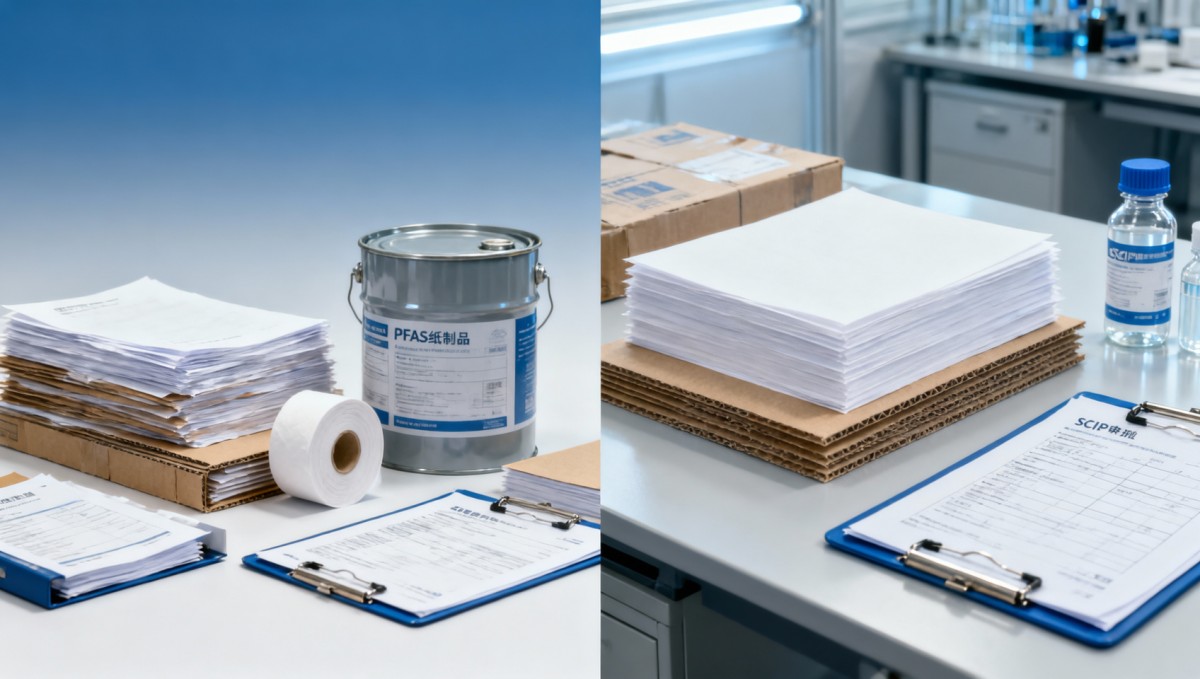
From August 1, 2026, importers of paper and paperboard products containing PFAS into the EU face a new compliance threshold: SCIP notification will be required before products can move through customs. The change follows the publication of REACH amendment Regulation (EU) 2026/1389 in the Official Journal of the European Union on July 23, 2026, and it is particularly relevant for paper chemicals suppliers, importers, downstream buyers, and market-access teams handling fluorinated surface sizing agents, water-repellent coating additives, and related formulations.
What the amendment now requires
According to the information provided, the OJEU published REACH amendment Regulation (EU) 2026/1389 on July 23, 2026. The rule makes SCIP notification mandatory from August 1, 2026 for importers of paper and paperboard products that contain PFAS substances. The scope described includes products involving PFAS such as fluorinated surface sizing agents and water-resistant coating additives. Products that do not meet this requirement will be refused customs clearance. The stated direct impact is on the formulation compliance of Chinese exporters of paper chemical additives and on downstream customer access.
Where pressure is likely to appear first in the supply chain
Market access risk for importing entities
From an industry perspective, importers are the first parties exposed to immediate operational risk because customs clearance is directly tied to SCIP notification. The main impact is likely to fall on shipment release, document readiness, and internal compliance checks before goods enter the EU market. What deserves closer attention is whether importers can obtain complete substance-related information from suppliers in time to support filing.
Formulation scrutiny for paper chemical suppliers
Analysis shows that suppliers of paper-use chemical additives may face closer review of product formulations where PFAS are present, especially in applications such as fluorinated surface sizing and water-repellent coating support. The practical pressure point is not only product performance, but whether formulation information can support downstream customer compliance needs. For exporters serving EU-linked accounts, customer qualification and continued order access may become more sensitive to documentation quality.
Downstream purchasing and qualification checks
For downstream buyers and procurement teams, the issue is likely to extend beyond purchasing price or delivery timing. Observably, supplier selection, onboarding, and continued approval may increasingly depend on whether imported paper or paperboard products can clear customs under the new filing requirement. The business impact may therefore appear in supplier communication, product approval workflows, and customer access decisions.
Supply chain coordination around shipment timing
Supply chain service providers and order management teams may also be affected where cross-border delivery depends on complete compliance records before import. What deserves closer attention is the coordination between product data, customs preparation, and delivery schedules, especially for shipments planned around the August 1, 2026 effective date.
What companies should check now
Identify PFAS-linked paper product exposure
Companies involved in paper and paperboard trade should first clarify whether the products they import or supply contain PFAS substances within the scope described in the provided information. This is especially relevant where fluorinated surface sizing agents or water-resistant coating additives are used.
Review filing readiness against customs risk
Because non-compliant products may be denied customs clearance, a key practical issue is whether SCIP notification can be completed before shipment arrival or import processing. The distinction between policy wording and operational execution matters here: even where commercial arrangements are already in place, clearance risk may still depend on filing readiness.
Prepare supplier documents and customer communication
Analysis shows that document flow is likely to become a core issue. Importers may need more complete substance and formulation-related declarations from suppliers, while exporters may face more detailed questions from EU customers. The immediate focus is on whether supporting materials are sufficient for customer qualification and filing support.
Track official wording and implementation details
What deserves closer attention is any subsequent official clarification on how the requirement is interpreted and applied in practice. For companies with active EU business, the compliance text itself and any follow-up implementation signals may shape internal review standards, delivery planning, and account communication.
Why this looks bigger than a routine filing step
Observably, this development should not be read only as an administrative update. The combination of a firm effective date, a SCIP notification requirement, and a customs clearance consequence makes it a market-access issue. Analysis shows that the immediate effect is practical rather than theoretical: if compliance documentation is not in place, business continuity can be interrupted at the border.
It is more appropriate to understand this as both a short-term operational change and a longer-term regulatory signal. In the short term, companies need to deal with filing readiness and shipment risk. In the longer term, the requirement may increase the importance of formulation transparency and downstream compliance support in paper-related chemical trade connected to the EU market. At the same time, parts of the implementation path may still require continued observation, especially where businesses rely on customer interpretation and execution at the customs stage.
How the market is likely to read this change
At this stage, the most grounded reading is that the amendment creates a clear compliance threshold for PFAS-containing paper and paperboard imports into the EU from August 1, 2026. The direct consequence described in the provided information is customs refusal for non-compliant products, which gives the issue immediate business relevance. A neutral industry view is that this is not simply background regulatory noise; it is a concrete access condition that importers, suppliers, and downstream buyers will need to factor into current transactions and customer approval processes.
Basis of this article and what still needs verification
This article is based on the user-provided news title, event date, and event summary regarding the effectiveness of the EU REACH amendment and the SCIP notification requirement for PFAS-containing paper and paperboard products. For this type of development, commonly relevant source categories may include official notices, company statements, industry association updates, authoritative media coverage, and standard-setting or regulatory documents. The specific official source link was not provided in the input, so continued verification remains necessary. Follow-up attention should focus on any additional official wording, implementation clarification, and how affected companies interpret the filing requirement in actual trade and customs processes.