‹
›
‹
›
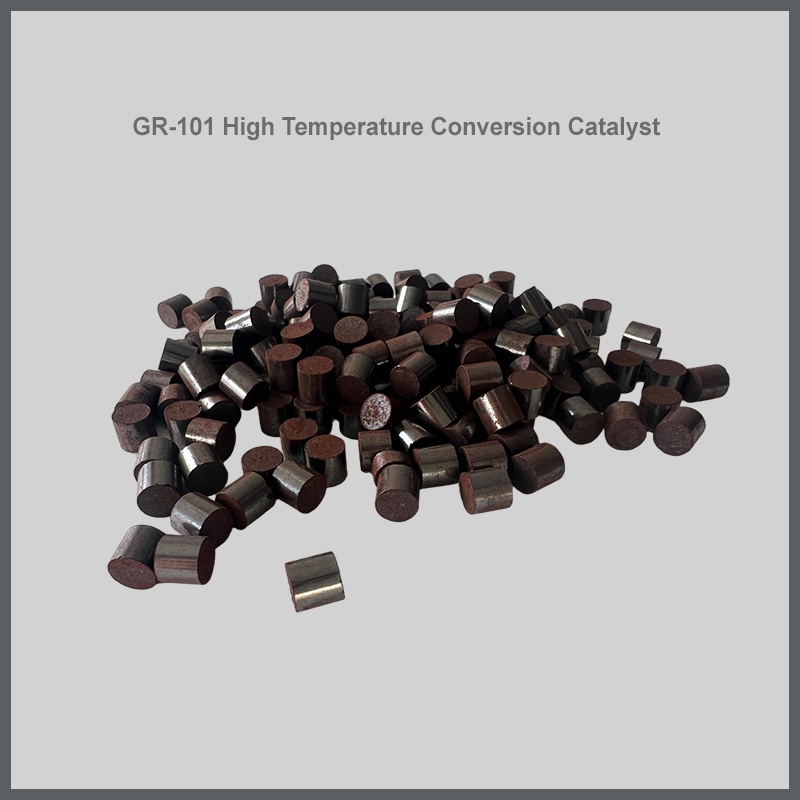
GR-101 High Temperature Shift Catalyst
The catalyst's core function is to react carbon monoxide (CO) in syngas with water vapor (H₂O), converting it into carbon dioxide (CO₂) and increased hydrogen (H₂), thereby increasing hydrogen production and purifying the gas. GR-101 boasts extremely high catalytic activity and excellent thermal stability, maintaining high reaction efficiency at low steam levels, significantly reducing energy consumption and operating costs.
Its high activity, excellent mechanical strength, and low bulk density enable reduced catalyst loading, minimized bed pressure drop, and shortened
Product Description
GR-101high temperature shift catalyst is an energy-saving product, which is suitable for large and medium-sized synthetic ammonia or hydrogen production units using coal, light oil, natural gas, oilfield gas, etc. as raw materials, and is especially suitable for use under low steam-gas ratio conditions in energy-saving synthetic ammonia units. The catalyst has high activity, high mechanical strength, low bulk density, selectivity under low steam- gos roti o conditions, low sulfur content in the body, and short sulfur release time.
Product Parameters
FAQ
1.Why is the GR-101 catalyst particularly suitable for low steam-gas ratio conditions?
This catalyst utilizes a unique composition and structural design, resulting in enhanced hydrothermal stability and selectivity. It maintains high catalytic activity even under low steam conditions, preventing side reactions and making it ideal for energy-saving plants.

2.What are the benefits of a catalyst with a low bulk sulfur content?
A low bulk sulfur content shortens the desulfurization time required before startup, allowing the catalyst to reach optimal activity more quickly, reducing startup time and raw material consumption, and improving plant startup efficiency.
3.What feedstock routes are this catalyst primarily used for?
It is suitable for large and medium-sized ammonia synthesis or hydrogen production plants using a variety of feedstock routes, including coal, light oil, natural gas, and oilfield gas, particularly those using energy-saving processes.
4.What is the practical significance of a catalyst with a low bulk density?
A low bulk density means a lighter catalyst per unit volume, which reduces loading, lowers bed pressure drop, saves power consumption, and reduces procurement and transportation costs for users.
5.How is the catalyst's mechanical strength at high temperatures ensured?
Through advanced preparation technology and special additives, the catalyst can maintain excellent mechanical strength and anti-breakage ability under high temperature and hydrothermal conditions, extending its service life.
Related product recommendations
Request a Quote
Related Recommendations