products
‹
›
‹
›
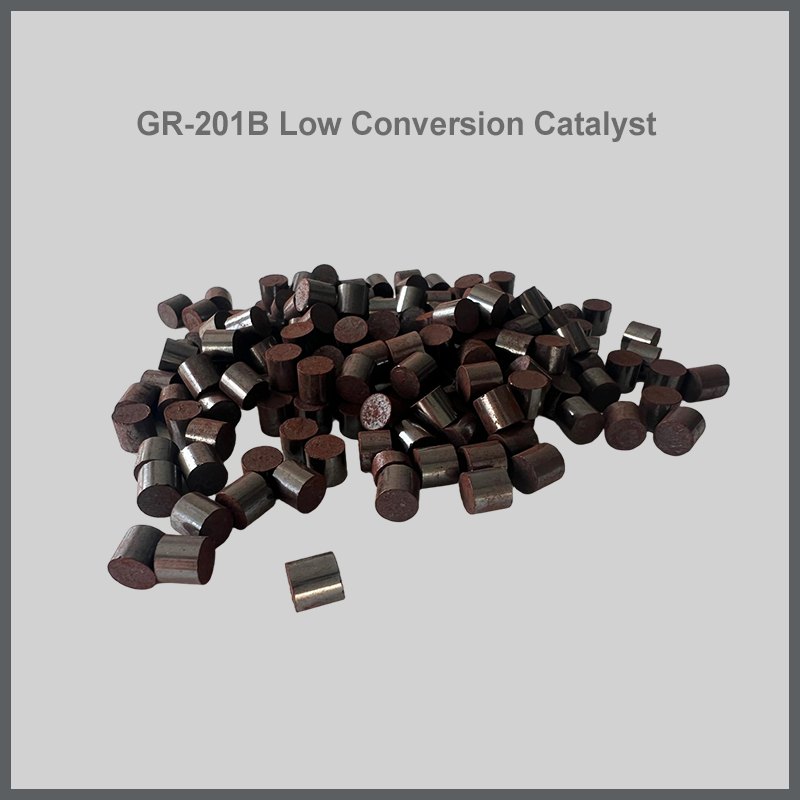
GR-201B Low Conversion Catalyst
This catalyst boasts excellent low-temperature activity and a wide temperature range, achieving high conversion efficiency with low energy consumption. Its low bulk density means a lighter weight per unit volume, reducing loading and system pressure drop. Its high mechanical strength resists airflow impact and abrasion, extending its service life.
GR-201B is highly flexible: it can be used alone or in combination with traditional copper-zinc-chromium catalysts. The optimal sol
Product Description
GR-201B carbon monoxide low temperature shift catalyst is used to promote the reaction ofco and water vapor to generate hydrogen and co2under low temperature conditions (180-260℃). Itiscurrentlywidelyusedinthecarbonmonoxidelowtemperatureshift process of synthetic ammonia and hydrogen production equipment to purify crude hydrogen and synthetic ammonia raw gas.The shift.
reaction is as follows:
CO+H20-CO2+H2+41.9KJ/mol
GR-201B catalyst has the characteristics of good low temperature activity, wide active temperature range, low bulk density, and high use intensity. GR-201B catalyst can be used in the whole furnace, or it can be loaded in combination with copper-zinc-chromium catalyst by an optimized loading method. The best loading scheme is to load the GR-201B catalyst in the main part of the bed and a small amount of copper-zinc-chromium catalyst in the upper port of the bed, so as to give full play to the characteristics of the two catalysts. The final product of the GR-201B catalyst does not contain free water, so there is no need to arrange a dehydration process during the temperature reduction process, and it is ensured that the strength of the product will not decrease due to dehydration during the temperature reduction process.
Product Parameters
FAQ
1.Why can the GR-201B catalyst maintain high activity at relatively low temperatures (180-260°C)?
This is due to its optimized copper-based active components and unique support structure, which significantly reduce the reaction activation energy, resulting in high intrinsic activity even at low temperatures. Furthermore, its wide active temperature range ensures operational stability.

2.What are the benefits of combining it with a copper-zinc-chromium catalyst? What is the recommended loading method?
Combining these two catalysts maximizes the advantages of each. We recommend loading a small amount of copper-zinc-chromium catalyst, known for its improved toxicity and mechanical strength, in the upper portion of the bed at the reactor inlet as a protective layer. We also recommend loading GR-201B in the main bed, leveraging its excellent low-temperature activity for deep conversion. This approach protects GR-201B while achieving optimal overall economic benefits.
3.What is the practical significance of the catalyst being "free of free water"?
"Free of free water" means that the catalyst will not generate condensed water during the temperature-increasing reduction process. Traditional catalysts require an extremely slow temperature ramp to dehydrate, preventing water droplet precipitation and catalyst pulverization. GR-201B eliminates this complex step, simplifying the startup process, shortening startup time, and completely eliminating the strength loss caused by improper dehydration.
4.What are the main applications of this catalyst?
It is widely used in the low-temperature carbon monoxide shift process in large-scale ammonia synthesis plants, hydrogen production plants (such as those used in refinery hydrogenation units), and methanol synthesis gas purification. It is a core catalyst for purifying feed gas and increasing hydrogen production.
5.How can the GR-201B catalyst be protected from poisoning and deactivation?
This catalyst is sensitive to poisons, and poisons such as sulfides (H₂S, COS) and chlorides (Cl⁻) carried in the feed gas must be strictly prevented from entering the reactor. This typically requires the installation of efficient desulfurization and dechlorination facilities before the catalyst bed.
Realted product recommendations
Request a Quote
Related Recommendations