products
‹
›
‹
›
Refining Enzyme
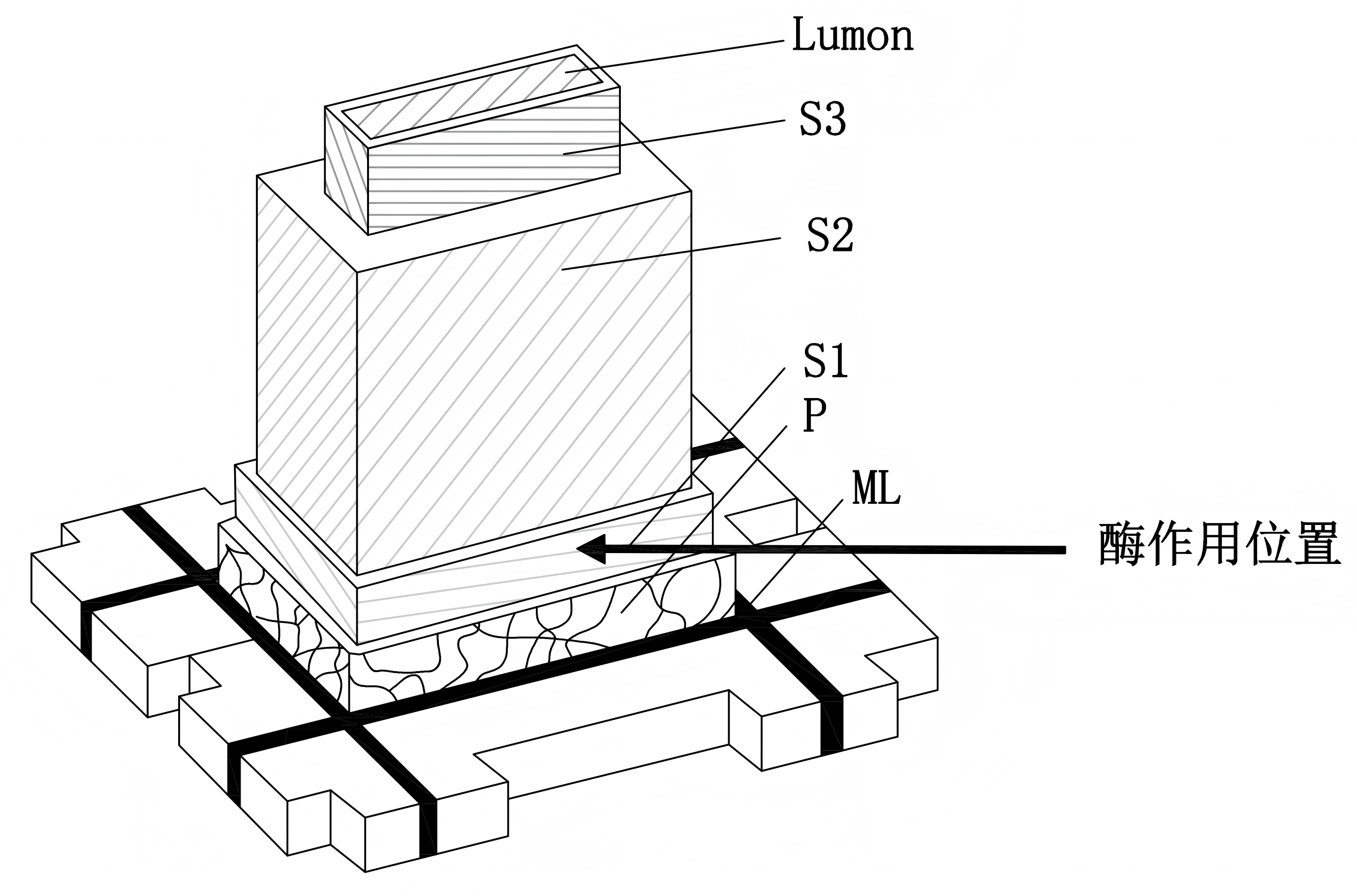
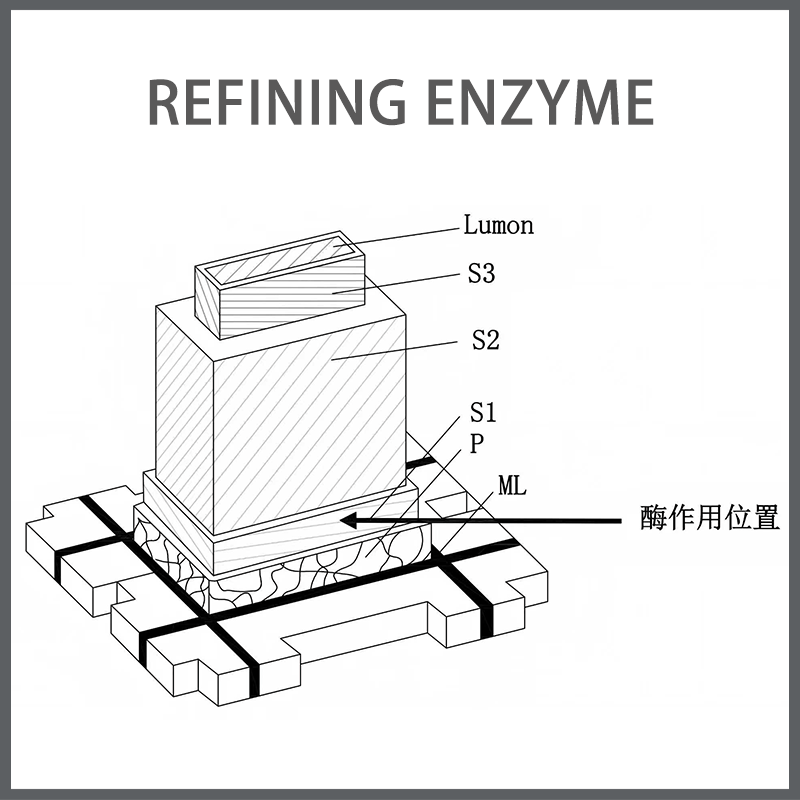
Figure 1. Mechanism of Action of Refining Enzyme
Figure 1. Cell wall structure of a wood fiber (conifer tracheid). ML. middle lamella; P. primary wall; S1, S2, S3, layers of secondary wall.

Optimal Conditions
Product Introduction
Refining enzyme facilitates the removal of P (primary wall) and S1 (outer layer of secondary wall) through mechanical action, thereby reducing beating current and achieving the goal of lowering beating energy consumption.
Features
Reduce refining energy consumption by more than 10%
Reduce long-fiber pulp ratio by 5-15%
Extend the service life of refiner plates, save costs, and increase pulp yield
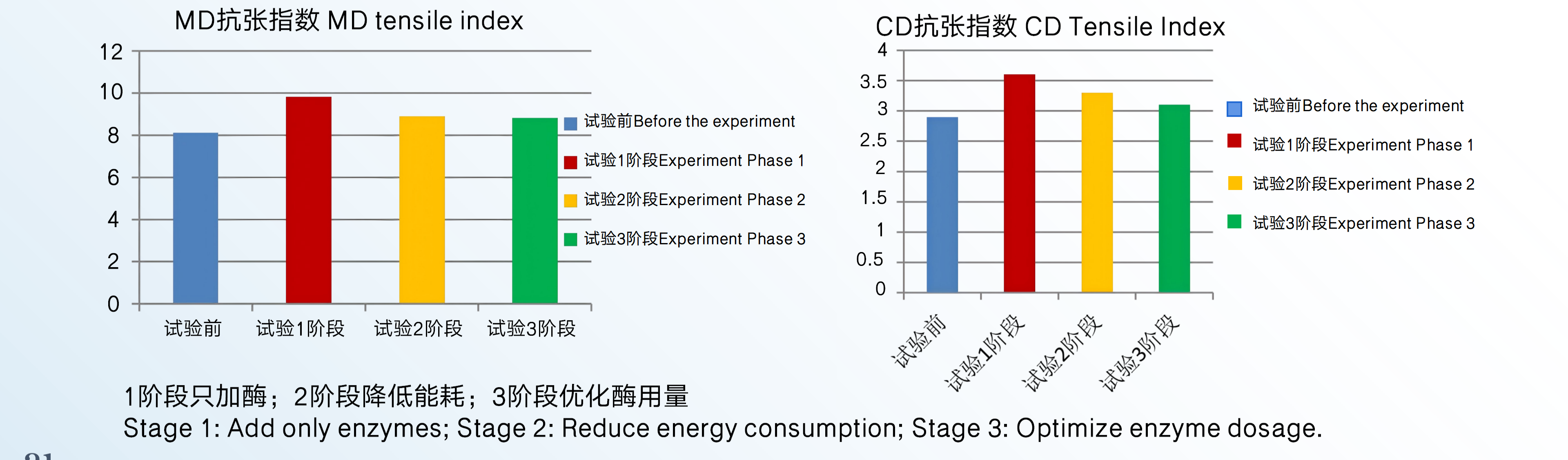
Enhance inter-fiber bonding and improve paper strength
Demonstration of comprehensive benefits
Precautions
The specific dosage of this product is determined by the pulp composition, treatment temperature, pH, and reaction time.
It can be added at a position before the refining stage that allows for a retention time of approximately 20-60 minutes.
During use, the temperature and pH must be maintained within the optimal range; otherwise, the enzyme activity will significantly decrease.
Case Study on Pulping Enzymes – TS Group Chongqing Household Paper
Application Scope: Household paper
Application Purpose: To reduce energy consumption and improve physical properties.
Application Effects: Disc mill power reduced by 30KW, energy consumption per ton of pulp reduced by 12-13KW.
Case Study on Pulping Enzymes – Shandong HL Paper Industry Cultural Paper
Power consumption decreased by 20 kWh/ton of pulp, and the proportion of long fibers decreased by 1.5%.
Request a Quote
Related Recommendations