


BLOG
CONTENTS
- Brazil Mulls Doubling Tariffs on Low-Cost Paper ImportsAug 17, 2026
- China’s Paper Industry to Join Carbon Market in Phases, Raising Export Compliance PressureAug 16, 2026
- China’s Paper Sector to Enter the National Carbon Market in 2026, Raising Export Compliance PressureAug 15, 2026
- China Paper Exports Jump 92.5% in Jan-MayAug 14, 2026
- 欧盟PPWR今日生效,输欧纸基包装合规门槛抬升Aug 13, 2026
China Adds Carbon Footprint Filing for Paper Exports
China’s paper export trade will face a new green compliance step from July 1, 2026, after authorities introduced a trial guidance document that ties customs filing to a carbon footprint declaration for certain paper and paperboard products. For exporters, overseas buyers, customs teams, and certification-related service providers, the immediate point of attention is not only the new document itself, but also how it may affect filing preparation, customs clearance timing, and market access in destination markets covered by the rule.
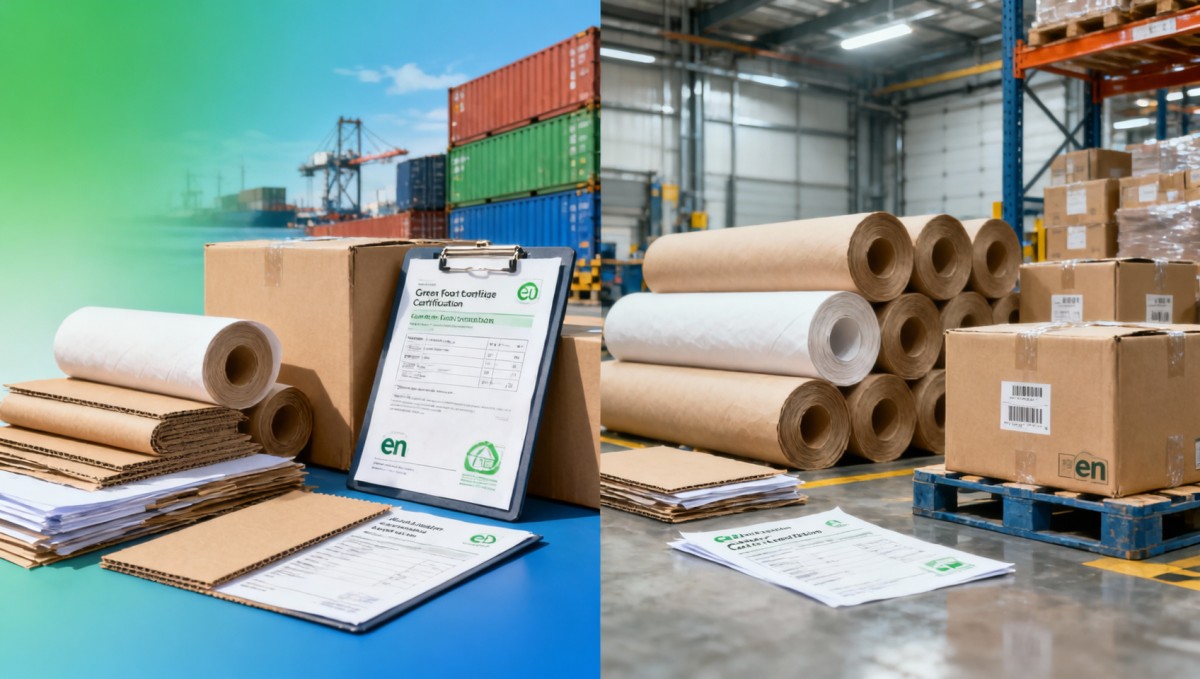
A new document requirement enters the export filing process
According to the information provided, on June 20, 2026, the General Administration of Customs, the Ministry of Ecology and Environment, and the Standardization Administration of China jointly issued the Guidelines for Green Trade Compliance of Export Paper and Paperboard Products (Trial). The guidance states that from July 1, 2026, major categories including coated paper, cultural paper, and packaging paper exported to the European Union, South Korea, Canada, and RCEP member countries must upload a carbon footprint declaration (CFP) certified by a recognized third-party body through the international trade single window.
The same information indicates that the CFP document must be included among the supporting documents attached to customs declaration materials. The rule is described as having a direct effect on overseas importers’ customs clearance efficiency and compliance-based market entry.
Where the operational pressure is likely to appear first
Export filing teams may face a tighter documentation threshold
From an industry perspective, export-oriented paper producers and trading companies are likely to be affected first because the rule adds a specific compliance document to the declaration workflow. The practical impact may appear in document collection, internal review, and alignment between shipment schedules and filing readiness, especially for covered product categories and covered destination markets.
Overseas buyers may pay closer attention to pre-shipment compliance readiness
Importers in the affected markets may also need to pay closer attention to whether the CFP statement has been properly prepared and uploaded, because the provided information directly links the requirement to customs clearance timing and compliance access. In practical terms, purchasing and logistics coordination may increasingly depend on whether exporters can present the required declaration in time.
Certification and document support functions become more visible
Observably, certification-related service providers and compliance support teams may become more involved because the rule specifically refers to CFP documents certified by recognized third-party institutions. For companies shipping covered paper products, the focus is likely to move toward whether supporting certification arrangements, document format checks, and customs submission workflows are ready before dispatch.
What companies should watch in the near term
Confirm whether products and destinations fall within scope
Analysis shows that the first practical task is to verify whether exported goods belong to the covered categories such as coated paper, cultural paper, or packaging paper, and whether the destination market falls within the listed jurisdictions. This is a basic screening step for deciding whether the new filing requirement applies to a shipment.
Review CFP document readiness before customs submission
Because the provided information makes the carbon footprint declaration part of the supporting customs documents, companies should pay close attention to whether the required CFP certificate has been completed by a recognized third-party body before filing. Where execution details are not yet provided in the input, it is more appropriate to treat this as a compliance checkpoint that still requires careful confirmation in practice.
Check internal coordination between trade, compliance, and delivery teams
What deserves closer attention is the handoff between sales, documentation, customs, and delivery functions. If the CFP statement becomes a prerequisite document for declaration in covered markets, shipment timing, document completion, and buyer communication may need closer coordination to avoid disruptions at the filing or clearance stage.
Continue tracking later wording and execution clarifications
The guidance is identified as a trial document, so companies should continue watching for later official clarification on implementation language, documentation practice, and operational interpretation. The current input does not provide those detailed execution standards, so any internal response should remain tied to verified updates rather than assumptions.
How this rule change is best understood for now
Analysis shows that this is more than a general policy signal because it sets a clear effective date, identifies covered product categories and markets, and links the CFP requirement to the customs documentation process. At the same time, it is still more appropriate to understand the development as an execution-stage compliance signal that warrants continued observation, rather than as a fully settled operating framework with all procedural details already visible.
From an industry perspective, the most important message is that green trade compliance is moving closer to day-to-day export operations for paper products. The immediate concern is not broad market forecasting, but whether companies involved in covered shipments can align certification, document preparation, and customs filing in time.
A compliance signal with immediate trade relevance
In summary, this development points to a concrete change in export documentation for certain paper and paperboard products from China starting July 1, 2026. The rule matters because it connects carbon footprint certification with customs submission and may affect clearance efficiency and compliance access for overseas buyers.
At this stage, it is more appropriate to read the news as a rule that has entered practical application for covered exports, while still leaving room for further observation on implementation details, document handling standards, and market feedback.
Basis of this article and points for continued verification
This article is generated based on the user-provided news title, event date, and event summary. For developments of this kind, commonly relevant source types may include official notices, releases from regulatory authorities, customs or trade administration information, industry association updates, standard-setting documents, and reporting by authoritative media. A specific official source link was not provided in the input, so the exact source text and later updates still need ongoing verification.
Further attention should remain on any follow-up clarification regarding policy detail, certification execution practice, filing interpretation, tender or procurement document changes, industry feedback, and how companies in the export chain implement the requirement in actual operations.