


BLOG
CONTENTS
- Brazil Mulls Doubling Tariffs on Low-Cost Paper ImportsAug 17, 2026
- China’s Paper Industry to Join Carbon Market in Phases, Raising Export Compliance PressureAug 16, 2026
- China’s Paper Sector to Enter the National Carbon Market in 2026, Raising Export Compliance PressureAug 15, 2026
- China Paper Exports Jump 92.5% in Jan-MayAug 14, 2026
- The EU's PPWR enters into force today, raising compliance thresholds for paper-based packaging exported to the EU.Aug 13, 2026
US Upholds 266.83% AD Duty on Chinese Crepe Paper
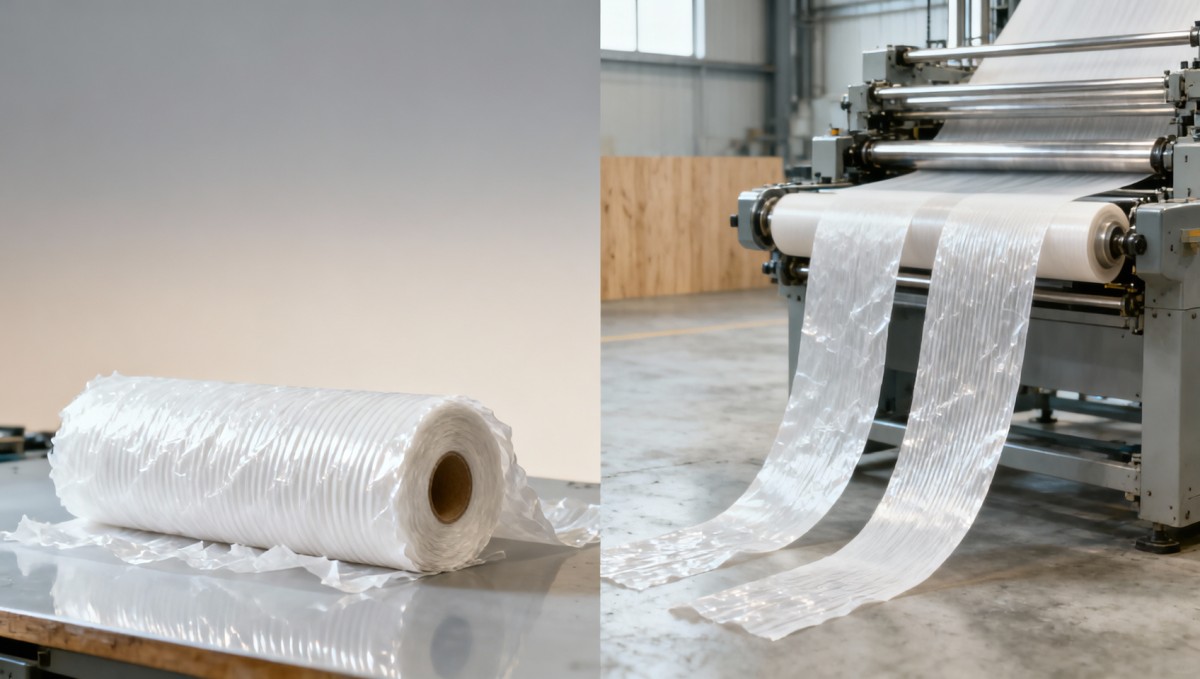
On May 20, 2026, the U.S. Department of Commerce issued a final affirmative sunset review determination on antidumping duties against Chinese crepe paper — the fourth such review since the original order in 2005. The ruling confirms that termination of the measures would likely lead to continuation or recurrence of dumping at a margin of 266.83%. This decision directly affects global packaging, tissue, and specialty paper supply chains, particularly where cost-sensitive procurement, tariff-sensitive logistics, and origin-compliant sourcing intersect.
Event Overview
On May 20, 2026, the U.S. Department of Commerce published its final determination in the fourth sunset review of the antidumping duty order on crepe paper from China. The Department concluded that revoking the existing duties would likely result in continued or recurring dumping at a weighted-average margin of 266.83%. The order — originally imposed in 2005 — remains in effect for five additional years, subject to periodic administrative reviews.
Industries Affected
Direct trading enterprises: Exporters and importers engaged in cross-border trade of crepe paper face immediate financial and operational impacts. Sustained high duties increase landed costs, erode margin visibility, and trigger customs scrutiny — especially around classification (HTS 4805.91) and origin verification. Repeated audits and CBP Form 28 requests are now more probable for shipments originating in or transshipped via third countries.
Raw material procurement enterprises: Buyers sourcing crepe paper for downstream conversion (e.g., floral wrap, gift packaging, medical gauze substrates) must reassess total landed cost models. With duties exceeding 266%, even modest volume shifts can materially affect budgeted input costs. Procurement teams are now under pressure to validate supplier compliance documentation — including mill certificates, production logs, and non-Chinese-origin affidavits — ahead of purchase orders.
Processing and converting manufacturers: Firms that laminate, dye, slit, or otherwise transform crepe paper face dual exposure: upstream tariff risk on base rolls and downstream pricing pressure when passing through duty-inflated costs. For U.S.-based converters relying on Chinese-sourced substrate, this ruling effectively narrows acceptable margin bands and may accelerate relocation of cutting-and-finishing operations to lower-tariff jurisdictions.
Supply chain service providers: Freight forwarders, customs brokers, and trade compliance consultants report rising demand for origin tracing support, tariff engineering assessments, and alternative routing analysis (e.g., Vietnam or Thailand-based toll processing). However, such arrangements carry heightened legal risk post-U.S. v. Hengfeng precedent — making due diligence on third-country value-add thresholds essential.
Key Focus Areas and Recommended Actions
Verify and strengthen origin documentation protocols
Importers should require certified production records, bill-of-materials breakdowns, and third-party audit reports from suppliers — not just commercial invoices or packing lists. U.S. Customs has explicitly cited insufficient origin evidence as grounds for retroactive duty assessments in recent crepe paper entries.
Evaluate near-term alternatives beyond Southeast Asia
While Vietnam and Indonesia are common fallbacks, analysis shows limited domestic crepe paper capacity and inconsistent quality control across regional mills. Observably, some buyers are piloting small-batch trials with Indian and Turkish producers — though lead times and MOQs remain constraints.
Assess feasibility of localized finishing
For firms with U.S. or Mexico-based converting assets, importing unbleached crepe paper rolls (HTS 4805.91.0010) — which fall outside the scope — then performing dyeing, embossing, or slitting domestically may offer partial relief. However, current scope language includes “all forms,” so careful product-specific scope analysis is required before implementation.
Editorial Perspective / Industry Observation
This is not merely a trade policy renewal — it signals a structural recalibration in how U.S. authorities assess ‘material injury’ in low-value, high-volume paper products. Analysis shows the International Trade Commission’s injury determination relied heavily on price undercutting data from 2023–2025, rather than volume displacement metrics. That shift suggests future reviews may prioritize price-based benchmarks over market-share erosion — a development better understood as a tightening of evidentiary standards, not an expansion of scope.
Conclusion
The continuation of steep antidumping duties underscores that crepe paper is no longer treated as a commodity input but as a strategically monitored category within broader U.S. industrial resilience frameworks. For stakeholders, the takeaway is not urgency alone — but precision: precise documentation, precise sourcing mapping, and precise alignment between contractual terms and regulatory reality. Long-term adaptation will hinge less on finding new countries and more on redefining what ‘origin’ means in vertically fragmented supply chains.
Source Attribution
U.S. Department of Commerce, Antidumping Duty Order: Crepe Paper from the People’s Republic of China (A-570-502), Final Results of the Fourth Sunset Review — Federal Register Vol. 91, No. 98, May 20, 2026. Also referenced: USITC Publication 5622 (2026), Investigation No. 731-TA-1021 (Fourth Review). Note: Administrative review cycles and potential scope clarification requests remain under active monitoring.