products
‹
›
‹
›
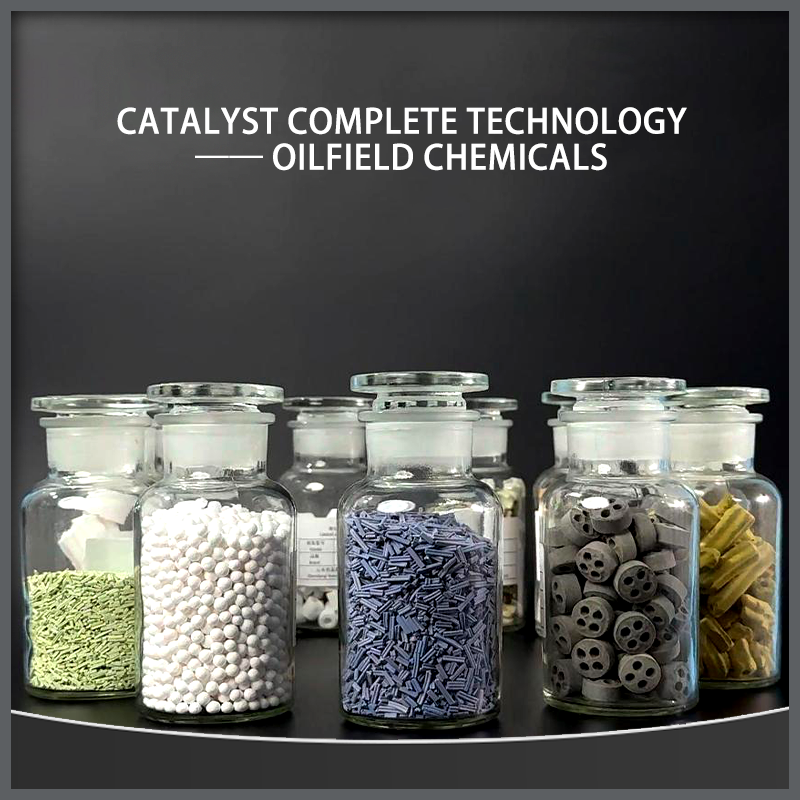
Catalyst complete technology—— Oilfield Chemicals
1.Ultra-high activity anionic-cationic surfactant flooding and pressure reduction injection technology
Product Introduction
Existing surfactants lack the heat and salt resistance and interfacial properties required for demanding oilfield applications. Mixed systems of anionic and cationic surfactants exhibit ultra-high interfacial activity but are prone to forming precipitates and liquid crystals, hindering their industrial application both domestically and internationally. To address this issue, we invented a novel anionic nonionic surfactant. By elucidating the interaction mechanisms, influencing factors, and synergistic regulation of anionic and cationic surfactants, we developed a series of anionic and cationic surfactants with ultra-high interfacial activity, low adsorption, and pressure-reducing injection enhancement.
Series of achievements and technical features

2.Foam sealing agent
Product Introduction
My country is rich in heavy oil resources, with the Shengli Oilfield alone boasting 660 million tons of proven geological reserves. Steam significantly reduces heavy oil viscosity and improves recovery. However, reservoir heterogeneity and other factors can lead to uneven steam absorption and steam channeling, resulting in a low oil-to-gas ratio. Conventional foaming agents struggle to meet the technical requirements of high-temperature and high-salinity steam reservoirs. To address this, a novel "yin-yang-non" foaming agent system was designed, establishing a foam enhancement mechanism characterized by rapid foaming, strong plugging, and low temperature sensitivity, resulting in enhanced foam deep plugging control technology.
Technical characteristics of foaming agent
The foaming agent has a salt tolerance of 100,000 mg/L and a calcium and magnesium ion tolerance of 3,000 mg/L.
The foaming agent forms dense foam, and in a model experiment with gas-liquid co-injection in porous media at 80-200°C, the foam resistance factor reached 140-388.
The parallel connection of high, medium, and low permeability pipes improves foam heterogeneity and adjusts the liquid separation profile. The high permeability pipe separation rate was reduced from 94.2% to 18.4%, and the overall oil recovery efficiency increased from 27.2% to 47.4%, a 20.2% improvement.
3.Natural gas well foam drainage agent
Product Introduction
As natural gas fields are exploited, formation pressure decreases, gas recovery rates decline, and this leads to liquid accumulation in the wellbore, threatening stable gas well production and ultimately causing the well to shut down. We have developed oil-resistant foaming agents and temperature-resistant, acid-resistant foaming agents for ultra-deep wells containing condensate oil and gas reservoirs and hydrogen sulfide, and have achieved industrial application.
Oil-resistant foam drainage agent
This oil-resistant foam drainage agent features the following:
Low gas-liquid surface tension, fast foaming speed: y = 27.5 mN/m;
High oil-water interfacial tension allows condensate to enter the foam film (entry coefficient E > 0), but does not spread on the film (spreading coefficient S ≤ 0);
Weak emulsification ability for condensate;
For a condensate containing 60% or more, the foam drainage rate is ≥ 60%.
Heat-resistant and acid-resistant foam drainage agent
Heat-resistant and acid-resistant foam drainage agents are available in liquid and solid stick forms. The main features of the products are as follows: temperature resistance of 140℃; pH 2-11; foam drainage rate ≥80%.
4.Yin-Yang Flexible Polymer Microspheres
Product Introduction
Polymer microspheres are widely used for profile control and channel sealing. However, they suffer from poor controllability and low sealing strength.
To address these issues, we have developed a new type of polymer microsphere with a sustained-release core-shell structure and a yin-yang composite flexible polymer microsphere. This allows for deep profile control and adaptive sealing.
We have been granted over ten invention patents in China and won the second prize of the 2017 Sinopec Technology Invention Award.
Sustained-release yin-yang composite flexible polymer microspheres
The product's key features are as follows:
Strong initial transport capacity, and its negatively charged shell imparts low adsorption characteristics;
Controllable degradation of the negatively charged shell;
Electrostatic association of the anionic and cationic cores enables adaptive blocking.
Request a Quote
Related Recommendations