products
‹
›
‹
›
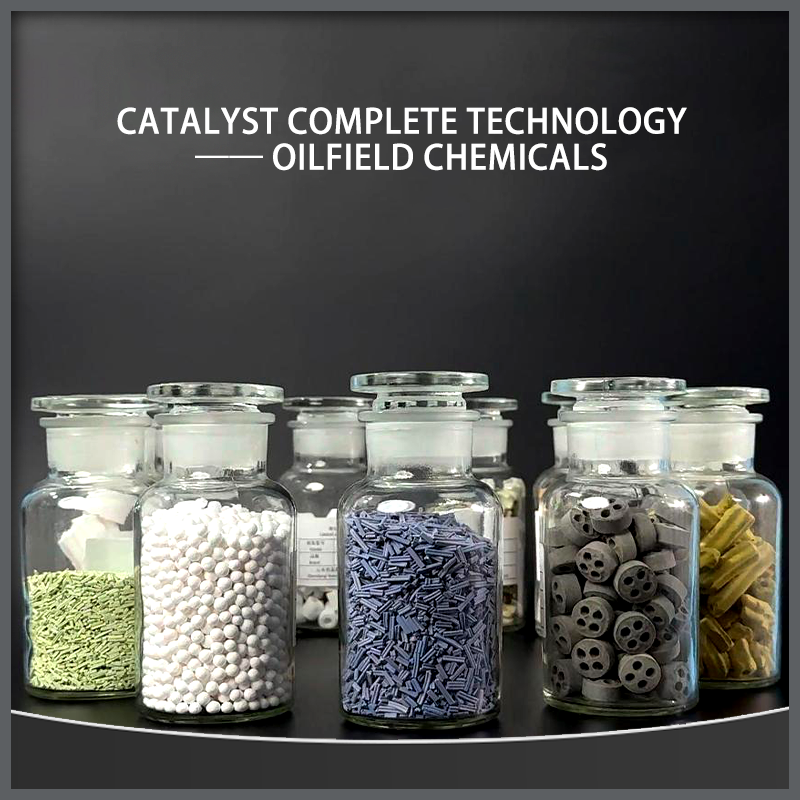
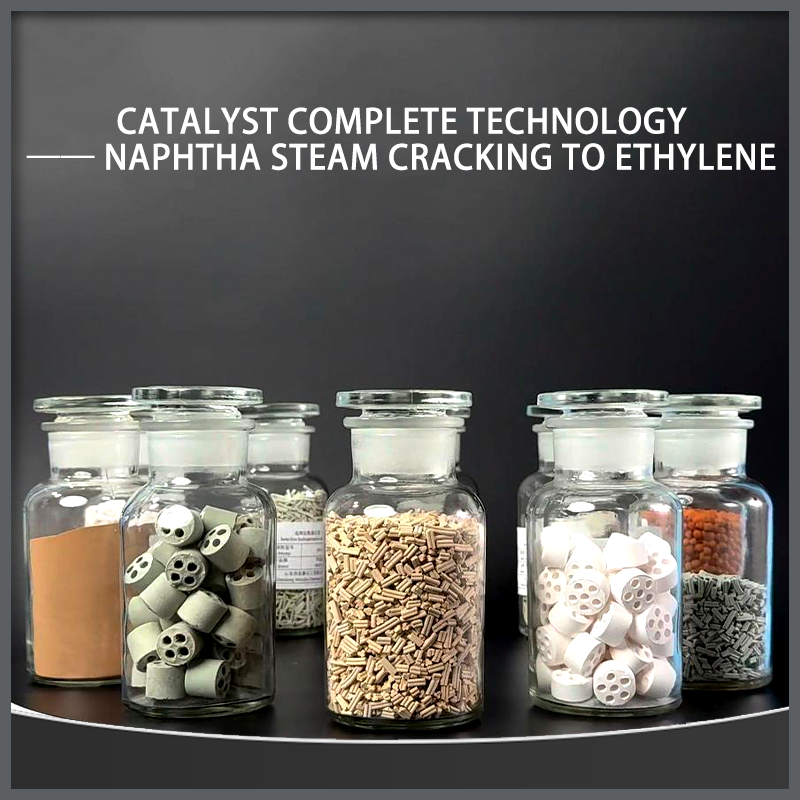
Catalyst complete technology—— Naphtha steam cracking to ethylene
1.SHP-01 series pyrolysis gasoline primary hydrogenation catalyst
Product Introduction
Pyrolysis gasoline is a liquid byproduct containing more than five carbon hydrocarbons generated during the steam cracking of naphtha and gas oil to produce ethylene. It is a general term for liquids with a dry point of 205°C after fractionation, which accounts for about 50-80% of the ethylene production. Pyrolysis gasoline undergoes a first-stage selective hydrogenation to remove dienes and conjugated aromatics, and then undergoes a second-stage hydrogenation to saturate monoolefins and remove impurities such as sulfur, nitrogen, and oxygen, and then is subjected to solvent extraction to obtain aromatics. As the main source of aromatics, pyrolysis gasoline contributes more than 40% of the world's aromatics.
SHP-01 series palladium-based catalyst
The SHP-01 series of palladium-based catalysts have a low content of active components and are resistant to water, colloids and poisons. They have the characteristics of high space velocity, high low-temperature diene hydrogenation activi5.0ty and selectivity, and good stability. Their comprehensive performance has reached the international advanced level.
SHN-01 series nickel-based catalyst
The SHN-01 series nickel-based catalysts have suitable pore structure and acid properties, highly dispersed active components, good activity selectivity, excellent impurity resistance, and comprehensive performance reaching the international advanced level.The SHN-01 series nickel-based catalysts have suitable pore structure and acid properties, highly dispersed active components, good activity selectivity, excellent impurity resistance, and comprehensive performance reaching the international advanced level.
Excellent energy saving: The second stage heating furnace can be eliminated, saving 3-4 million yuan/year in second stage steam costs (400,000 tons/year device)
Energy-saving SHS-01 Pd-based catalyst
Energy-saving features: Improved primary reactor selectivity and the elimination of the secondary heating furnace completely eliminate dispersed emissions of pollutants such as NOx.
According to calculations, by increasing catalyst selectivity, the secondary reactor temperature rise can exceed 40°C, achieving self-heating equilibrium.

2.SHP-02 Series Pyrolysis Gasoline Secondary Hydrogenation Catalyst
Product Introduction
Pyrolysis gasoline is a generic term for the C5+ hydrocarbons produced as a byproduct of steam cracking to produce ethylene, fractionated at a dry temperature of 205°C. Due to significant variations in cracking feedstock, cracking method, furnace type, and cracking depth, pyrolysis gasoline composition varies significantly, resulting in poor thermal and chemical stability and precluding direct use. Typically, it undergoes a first-stage selective hydrogenation to remove dienes and conjugated aromatics, followed by a second-stage hydrogenation to saturate monoolefins and remove impurities such as sulfur, nitrogen, and oxygen. The C6-C8 fraction is then subjected to solvent extraction to extract aromatics.
SHP-02 series pyrolysis gasoline second stage hydrogenation catalyst
The main brands currently promoted for pyrolysis gasoline secondary hydrogenation catalysts include SHP-02 and SHP-02F. The characteristics of the main products are shown in the table below:
3.Ethylene tar hydrogenation catalyst
Product Introduction
Pyrolysis gasoline is a generic term for the C5+ Ethylene tar is a high-boiling liquid product produced as a byproduct of the steam cracking process of cracking raw materials to produce ethylene. It is a heavy distillate oil rich in aromatics, accounting for about 1/5 of the ethylene production. It mainly contains monocyclic, polycyclic and condensed aromatic components. It has a complex composition, is easy to polymerize, has high colloid, heavy metal and ash content, and cannot be used directly. Ethylene tar hydrogenation technology adopts a two-stage hydrogenation process: the first stage uses low-temperature liquid phase hydrogenation to remove easily polymerizable substances, and the second stage uses high-temperature hydrogenation to saturate monoolefins and remove impurities such as sulfur and nitrogen to achieve the stability, refining and appreciation of low-value cracking byproducts. The product can be used as solvent oil or as a raw material for producing aromatics.
Features
The currently promoted ethylene tar hydrogenation catalysts include the first-stage SHN-D01 and second-stage SHP-D02 series catalysts. Key product features include:
High activity: Using the SHN-D01 series catalyst, at an inlet temperature of 60-80°C, the first-stage product bromine value is less than 25gBr/100g oil. Using the SHP-D02 series catalyst, under relatively mild reaction conditions, the second-stage product achieves a naphthalene conversion rate of >95%. The hydrogenated product bromine value is <0.5gBr/100g oil, and sulfur and nitrogen levels are <1.0ppm.
High selectivity: Using the SHN-D01 series catalyst, the first-stage product DCPD is ≤1%. Using the SHP-D02 series catalyst, under relatively mild reaction conditions, the tetralin selectivity is >92%, and the unit operates with excellent stability.
Environmentally friendly: The catalysts are free of harmful and corrosive components, are environmentally friendly, and are regenerable.
4.SHP-C8 cracking carbon eight phenylacetylene selective hydrogenation catalyst
Product Introduction
Styrene (ST) is a key monomer in the production of polystyrene (PS), ABS resin, and styrene-butadiene rubber. In recent years, with the expansion of ethylene production, the extraction and recovery of styrene from pyrolysis gasoline has become a highly sought-after technology for increasing styrene production. Pyrolysis gasoline is a significant byproduct of the ethylene industry, containing approximately 4-6% styrene. For large-scale ethylene companies, separating styrene before hydrogenation can yield significant benefits and bring substantial economic returns.
Styrene is recovered from pyrolysis gasoline using extractive distillation. Due to the similar chemical structure of phenylacetylene (PA) and styrene, and their interactions with extractants, extractive distillation alone cannot effectively separate styrene from PA. Pyrolysis gasoline must be selectively hydrogenated before styrene extraction.
SHP-C8 catalyst
The main brand currently promoted for the selective hydrogenation catalyst for cracking C8 phenylacetylene is SHP-C8. The characteristics of the main products are shown in the table below.
The active phase of the cracking carbon eight selective hydrogenation SHP-C8 catalyst is evenly distributed and has a stable composition structure. The catalyst has the characteristics of high phenylacetylene hydrogenation activity, low styrene loss rate and strong resistance to carbon deposition.
Request a Quote
Related Recommendations