products
‹
›
‹
›
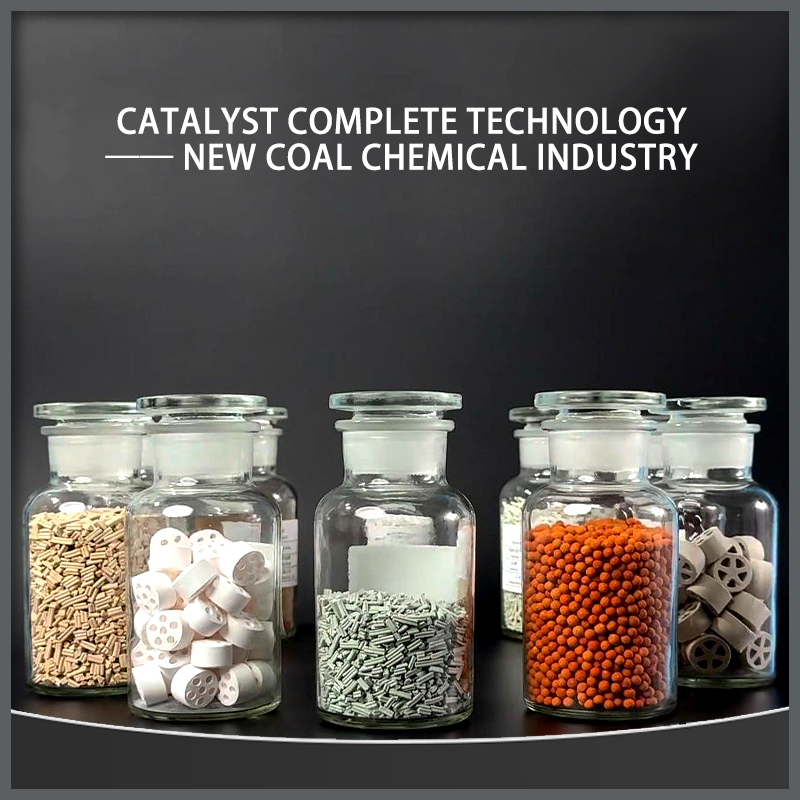
Catalyst complete technology—— New coal chemical industry
1.Catalyst: S-MTO methanol-to-olefins technology
Product Introduction
In response to my country's abundant coal and limited oil resources, methanol-to-olefins (MTO) technology has experienced rapid development in recent years. S-MTO is a pioneering, full-process technology with independent intellectual property rights. After more than a decade of continuous innovation, this project has achieved significant technological breakthroughs, including the development of several unique technologies, including "nano-lamellar multi-level pore molecular sieves and highly wear-resistant catalysts," "rapid fluidized bed reaction-regeneration process," and "MTO high-efficiency olefin separation process," ultimately developing a complete set of technologies for methanol conversion reaction and olefin separation.
S-MTO full process technology and catalyst
·Based on the new nano-platelet multi-level porous SAPO-34 molecular sieve material, a high-performance, highly wear-resistant MTO fluidized bed catalyst has been developed, featuring high ethylene + propylene carbon-based selectivity and low catalyst consumption. MTO rapid fluidized bed reaction-regeneration technology offers high reaction space velocity and a small reactor diameter, significantly improving reaction efficiency. The innovative co-current two-stage regeneration technology enables precise control of catalyst carbon deposition.
·Technology for efficient catalyst fines removal in the reaction-regeneration system. The developed "negative pressure suction" three-cyclone separator and "multi-component stacked" high-efficiency scrubber achieve high fines removal rates in the scrubber, resolving challenges that hinder the long-term operation of the unit.
·A new process for efficient MTO olefin separation has been developed. Key technologies and separation processes, including pre-ethanization, ethylene recovery from C4 hydrocarbons, and oxygenate removal, have been developed, resulting in high-purity ethylene and propylene products that surpass comparable international separation technologies.
·The integration of the MTO process with the naphtha steam cracking process allows for efficient utilization of MTO by-product alkanes, further reducing methanol consumption per unit, and improving the unit's flexibility and economics.

2.Catalytic synthesis gas to ethylene glycol complete technology
Product Introduction
Ethylene glycol (EG) is an important organic chemical raw material, primarily used in the production of polyester fibers. my country has a strong demand for EG, accounting for over 50% of global consumption. To address my country's oil resource shortages and high EG production costs, and taking into account my country's resource characteristics, we have conducted research and development on catalytic technologies and processes for producing EG from coal-based, non-petroleum feedstocks via synthesis gas. We have developed high-performance coupling, oxalate hydrogenation, and nitric acid conversion catalysts, and innovated technologies for oxidative esterification, dimethyl oxalate and EG product refining, online analysis, and safety control. We have completed large-scale plant research and built a single-series industrial plant with a maximum capacity of 200,000 tons/year.
Synthesis gas to ethylene glycol catalyst series
Core catalysts for syngas-to-ethylene glycol include oxidative coupling catalysts and oxalate hydrogenation catalysts. Their innovations include: A pioneering bimetallic impregnation solution complex formulation technology has resulted in the development of a highly efficient coupling catalyst with excellent activity and selectivity, a long lifespan, and strong hydrogen tolerance.
Innovative technologies for efficient modification of subgroup elements and surface acidity control have led to the development of a hydrogenation catalyst with stable Cu crystals, strong resistance to deep reduction, minimal side reactions, and excellent overall performance.
3.Ethylene glycol refining and recovery complete technology
Product Introduction
Based on the impurity composition and physicochemical properties of crude ethylene glycol, we developed a complete ethylene glycol refining and recovery technology consisting of membrane separation - light-to-light-to-heavy-to-adsorption refining. Its technical features are as follows:
Combined membrane separation technology: This technology effectively removes high-boiling-point and colored impurities from crude ethylene glycol, improving the operation of the subsequent distillation system.
High-efficiency adsorption refining agent: High adsorption capacity and highly selective impurity removal.
High product quality: The ethylene glycol after combined refining meets recycling standards.
Low energy and material consumption: The membrane separation and adsorption refining systems operate under gentle conditions, resulting in low wastewater emissions
Request a Quote
Related Recommendations